


Rex Mphisa/AFP
AFRICAN leaders are pushing to have colonial-era crimes recognised, criminalised and addressed through reparations.
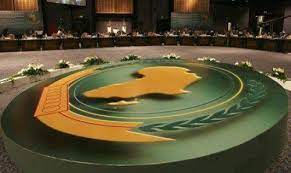
At a conference in the Algerian capital, Algiers, diplomats and leaders convened to advance an African Union resolution passed at a meeting earlier this year calling for justice and reparations for victims of colonialism.
Such a resolution, if implemented, could jump start economies of most African countries looted by settlers during that era.
Settlers in Zimbabwe, primarily associated with the British South Africa Company (BSAC) led by Cecil Rhodes, systematically seized several prime resources through violence, coercion, and subsequent legislation.
Top on the list is land , a primary resource seized through military campaigns and divisive engagements in the 1890s which saw BSAC taking ownership of vast amounts of land as a “right of conquest”.
Indigenous Africans were confined to “native reserves,” while the majority of the productive land was reserved for white control, a situation formalized by legislation like the 1913 Natives Land Act and the Land Apportionment Act of 1930.
They also took livestock, primarily cattle where the BSAC organized large-scale looting of Ndebele and Shona cattle then central to the local economy and source of wealth.
A “Loot Committee” was established to manage the systematic seizure of hundreds of thousands of head of cattle.
The settlers, driven by the desire for the region’s rich natural resources, actively looted gold and other minerals.
Rhodes established “Rhodesia Ancient Ruins Ltd” in 1895 specifically to extract gold from over 40 archaeological sites including the Great Zimbabwe.
The settlers also looted cultural priceless artifacts were taken from the Great Zimbabwe and other sites.
Most notable among these are the eight soapstone birds, which hold great spiritual and national significance in Shona culture.
They were removed from the site in dubious transactions and dispersed to Western museums and private collections, though most have since been returned to Zimbabwe.
The settlers made amateurish digs and pillaging between the 1890s and 1920s destroyed much of the archaeological context and stratigraphy of sites like Great Zimbabwe, greatly hindering future historical and scientific work.
These seizures were fundamental to establishing colonial rule and the subsequent economic structure of Southern Rhodesia (as Zimbabwe was then known).
Algerian foreign minister Ahmed Attaf said Algeria’s experience under French rule highlighted the need to seek compensation and reclaim stolen property.
A legal framework, he added, would ensure restitution is seen as “neither a gift nor a favour”.
“Africa is entitled to demand the official and explicit recognition of the crimes committed against its peoples during the colonial period, an indispensable first step toward addressing the consequences of that era, for which African countries and peoples continue to pay a heavy price in terms of exclusion, marginalisation and backwardness,” Attaf said.
International conventions and statutes accepted by a majority of countries have outlawed practices including slavery, torture and apartheid.
The United Nations Charter prohibits the seizure of territory by force but does not explicitly reference colonialism.
That absence was central to the African Union’s February summit, where leaders discussed a proposal to develop a unified position on reparations and formally define colonisation as a crime against humanity.
The economic cost of colonialism in Africa is believed to be staggering, with some estimates in the trillions.
European powers extracted natural resources often through brutal methods, amassing vast profits from gold, rubber, diamonds and other minerals, while leaving local populations impoverished.
African states have in recent years intensified demands for the return of looted artefacts still housed in European museums.
Attaf said it was no mistake that the conference was held in Algeria, a country that suffered some of the most brutal forms of French colonial rule and fought a bloody war between 1954 and 1962 to win its independence.
Its impact was far-reaching: nearly a million European settlers held greater political, economic and social privileges, even though Algeria was legally part of France and its men were conscripted during the second world war.
Hundreds of thousands of people died in the country’s revolution, during which French forces tortured detainees, disappeared suspects and devastated villages as part of a counterinsurgency strategy to maintain their grip on power.
“Our continent retains the example of Algeria’s bitter ordeal as a rare model, almost without equivalent in history, in its nature, its logic and its practices,” Attaf said.
Algeria’s experience has long informed its position on the disputed Western Sahara, a former Spanish colony claimed by neighbouring Morocco and the pro-independence Polisario Front.
Attaf last Sunday framed it as a case of unfinished decolonisation, echoing the African Union’s formal stance even as a growing number of member states have moved to support Morocco’s claim to the territory.
He called it “Africa’s last colony” and lauded the indigenous Sahrawis’ fight “to assert their legitimate and legal right to self-determination, as confirmed – and continuously reaffirmed – by international legality and UN doctrine on decolonisation”.
Algeria has for decades pressed for colonialism to be tackled through international law, even as its leaders tread carefully to avoid inflaming tensions with France, where the war’s legacy remains politically sensitive.
French president Emmanuel Macron in 2017 described elements of the history as a crime against humanity but stopped short of issuing an official apology and implored Algerians not to dwell on past injustices.
Mohamed Arezki Ferrad, a member of Algeria’s parliament, told the Associated Press that compensation had to be more than symbolic, noting Algerian artefacts looted by France have yet to be returned. That includes Baba Merzoug, a 16th-century cannon that remains in Brest.
Earlier in November, the Guardian reported on similar calls in the Caribbean, with a delegation from the body leading that region’s slavery reparations movement preparing to visit the UK to advocate on the issue.
Caribbean governments have also been calling for recognition of the lasting legacy of colonialism and enslavement, and for reparative justice from former colonisers, including a full formal apology and forms of financial reparations.