


By Ziyah News Network Reporter
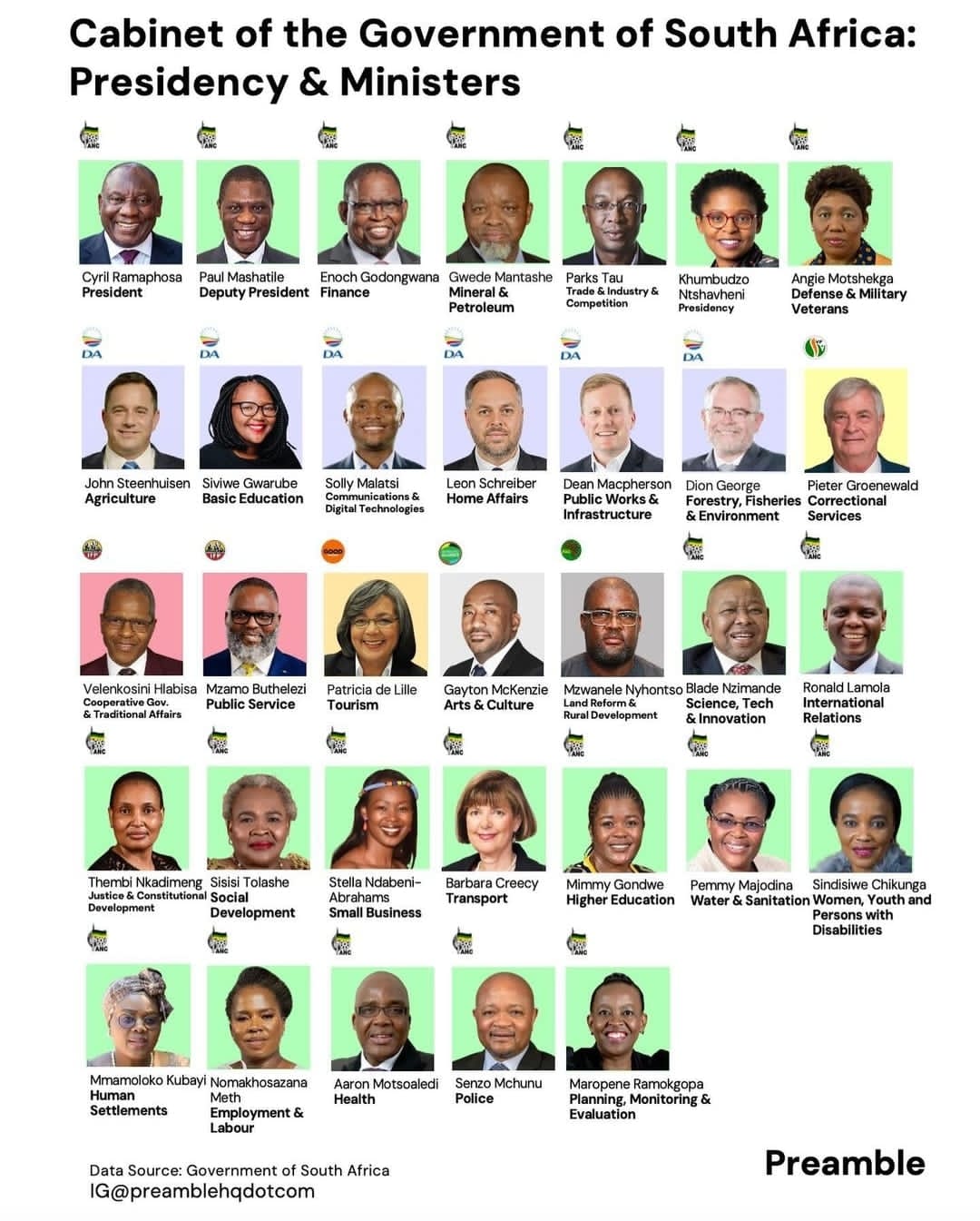
Thirty days after the national elections and intense behind the scenes negotiations, media speculation, public spat accusations and counter accusations, South Africa finally has an expanded Government made up 11 parties as announced by President Cyril Ramaphosa last night.
The new Government comes without the presence of two parties branded radical by the second largest party and the then official opposite the Democratic Alliance.
As he announced the bigger cabinet that takes SA back to the memories of 1994 when the nation had its first Government of National Unity (GNU) President Cyril Ramaphosa the Government is a reflection of prioritising inclusivity, stability, and effective governance.
“We have had to consider the stability and durability of the government. Some have expressed the concern about the length of time it has taken. At the same time, many have pointed to experiences in other countries where the formation of multiparty governments took several months,” said President Ramaphosa
He emphasized the importance of consensus-building, respecting the Constitution, and deploying committed individuals. He acknowledged concerns about the time taken to form the government, citing international examples of similar processes.
The President highlighted the need for representative governance, effective delivery, and addressing South Africa’s challenges. Notably, the initial plan to reduce portfolios has given way to inclusivity, resulting in an expanded cabinet.
“I indicated my intention to reduce the number of portfolios. However, due to the need for inclusivity, this has not been possible. In some instances, we’ve had to consider it necessary to separate certain portfolios. The ministries of electricity and energy will now be merged” he said.
“Higher Education will be separated from science, technology and innovation. There will no longer be a ministry of public enterprises – coordination will be located in the Presidency.”
The just unveiled GNU has a total of 33 ministries with other portfolios among the 33 having two deputies. It remains to be seen how the Government will function given what other political analysts have branded ideological differences and obviously the exclusion of the third and fourth most popular parties in the country, the EFF and MK parties.