


By Katlego Mokwena, Own Correspondent
The United Nations Development Programme (UNDP) and its partners are implementing the Climate Resilience Project in Southern Zimbabwe to mitigate the effects of climate change.
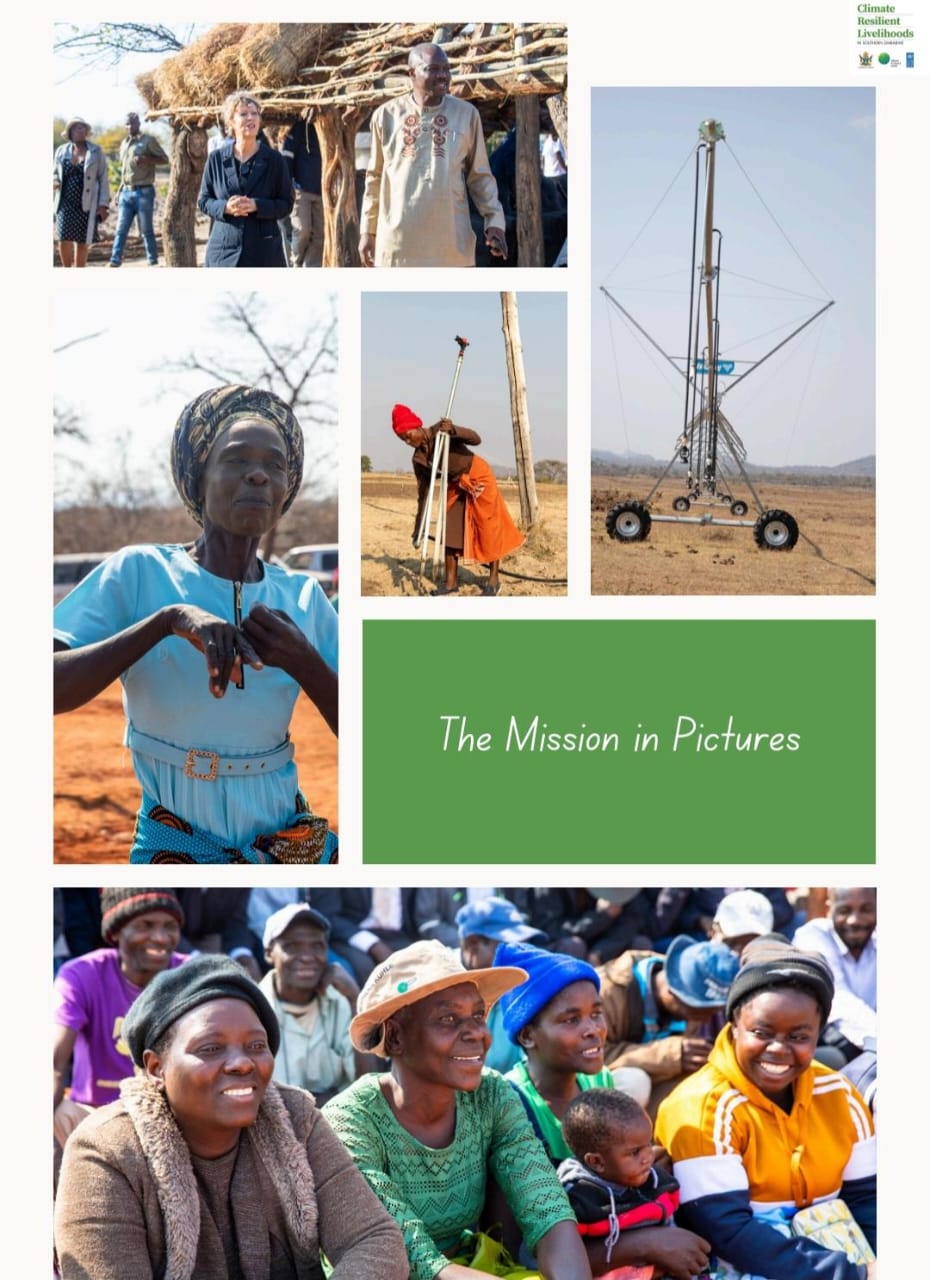
Supported by the Green Climate Fund and the Ministry of Lands, Agriculture, Fisheries, Water and Rural Development, the project has revitalized five irrigation schemes, with three more nearing completion.
The region’s dry arid conditions make rain-fed farming challenging due to low rainfall.
The project aims to address this by easing the effects of climate change, which severely impacts water availability and exacerbates existing water stress.
To achieve this, the project employs a “climate proofing” concept, identifying key climate hazards and evaluating their impact to develop cost-effective interventions.
The Project Manager for Green Climate Fund, UNDP, Rungano Benza says the project which will run up to 2027 is looking to rehabilitating existing irrigation schemes and build new ones.
“To this end, the project is developing 9 new irrigation schemes and revitalizing 12 existing irrigation schemes in 9 out of 15 operational districts. Looking ahead, by the end of 2024, 8 schemes will be complete with a total of 764 hectares”, he said
Implementation efforts are being made to ensure community resilience to climate change as most try to recover from the effects of El Nino, irrigation members are happy with the development and eager to hit the market with their produce.
The project which ends in 2027, is expected to directly benefit 5000 households, with at least 30% being women led households. Its objective is to strengthen the resilience of agricultural livelihoods of vulnerable communities, particularly women, in southern Zimbabwe in the face of increasing climate risks and impacts.