


By Rex Mphisa
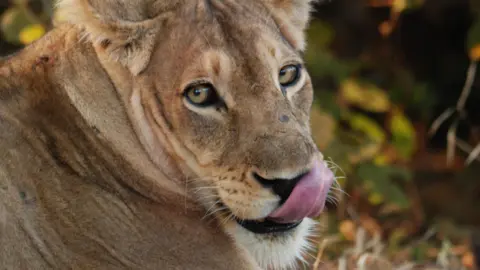
THE Beitbridge Rural District Council has sought the assistance of other stakeholders for drone technology in stepped up efforts to capture stray lions.
In an update on Monday Beitbridge Rural District Council Oscar Chiromo said the local authority coordinating the search now in its second week, had approached the Zimbabwe Republic Police (ZRP), The Zimbabwe Revenue Authority (ZIMRA) and Bubye Valley Conservancy for assistance.
ZIMRA has drones used for aerial monitoring of smugglers crossing the Limpopo with contraband and the ZRP will provide security to pilots.
“I am informed the parties are going back to Mawale Hills to search for the lions using drones. Lions sleep during day and have been difficult to locate. Most of their movements are at night and early morning,” he said.
Instead of shooting dead the predators, BBRDC is keen to have them captured alive for preservation of wildlife and eventually repatriate them back to South Africa.
The lions have collars and trackers which have made it easy to track them from South Africa., their origins in the Kruger National Park.
Latest satelite images seen by Ziyah News Network show the lions had done just 10.54km in the last few days with frequent visits to the Limpopo River in suspected attempts to cross.
BBRDC has sought the assistance of Bubyi Valley Conservancy for their professional hunters to capture the lions, Chiromo said.
To date there have been no reports of anyone killed or attacked by the large wild cats.
Last week authorities issued high-alert warnings regarding the lions, specifically in the eastern areas of Tshituripasi, Nuli, and Mawale.
But lately the predators were close to Beitbridge urban and even within a radius of three kilometres from the Central Business District.
The lions, reported to be two, one with cubs, have been spotted in communal areas, prompting warnings for residents and travelers in the eastern Beitbridge area to be extremely cautious.
BBRDC urged villagers to move in groups during the day and to avoid moving at night.
Residents are advised not to provoke or attempt to capture the animals, but rather to report sightings to the police or wildlife authorities immediately.
Human-wildlife conflict is a recurring issue in this border region, with predators often crossing from nearby parks or farms, impacting local livelihoods and livestock.
Similar sightings and concerns about human -wildlife conflict have been reported frequently in this region.