


Environmental Reporter
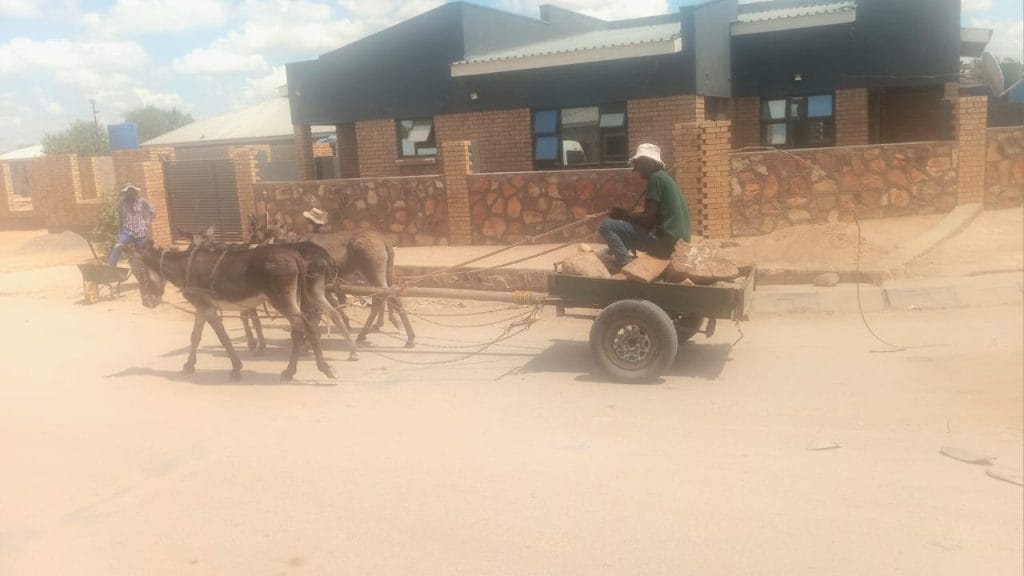
AT dawn, convoys of donkey-drawn carts lumber along roads into Dulivhadzimu Suburb, the rhythmic creak of strained wheels and the crack of whips upon the weary beasts of burden echoing against the dry Limpopo breeze.
In similar fashion, other sets of donkeys trudge from different directions with carts of fresh Mopani timber used as fuel in Beitbridge’s countless food kitchens and homes without electricity.
While food kitchens and homes without electricity account for the largest number of culprits and consumers of fresh firewood in Beitbridge, statistics at the courts are far from reflecting the same.
By default, the Zimbabwe Electricity Supply Authority (Zesa) is guilty of failing to power homes in most new areas, leaving residents to rely on firewood for cooking.
However, in the mix of all this, authorities are largely to blame for the runaway deforestation that threatens Beitbridge, stealing trees from future generations.
The acting Officer Commanding Beitbridge Police District, Superintendent Philisani Ndebele, had yet to respond to media inquiries regarding what the police are doing to curb the wanton cutting down of trees.
Beitbridge Rural District Council (BBRDC) Chief Executive, Kiliboni Mbedzi, said her office has a team monitoring firewood poachers regularly.
“We have a team which is deployed on a daily basis for natural resource monitoring, dealing with both sand and firewood,” she said in a brief response to questions from Ziyah News Network.
An official from the Forestry Commission in Beitbridge responded by sending a national statement from Evelyn Ndlovu, the Minister of Environment, Climate and Wildlife.
The Town Clerk for Beitbridge, Loud Ramakgapola, said his organisation is always deploying security teams to monitor firewood gangs, ensuring only licensed vendors operate.

“Those (with fresh firewood) should not be allowed. We always try to minimise the bringing in of wet firewood. Anyone trading in firewood should get a licence from the Forestry Commission,” he said.
Yet, the reality on the ground is different.
Firewood merchants’ donkey carts, locally called garikis, weave their passage unscathed between Zimbabwe Republic Police (ZRP), BBRDC, Municipality of Beitbridge (MoB), Environmental Management Agency (EMA), and Forestry Commission patrol vehicles in the border town.
Notably, the ZRP has its Minerals, Flora and Fauna Unit tasked with protecting, monitoring, and curbing the unauthorised harvesting, possession, or commercial trade of endangered and specially protected indigenous plants and timber.
The BBRDC and MoB have a duty and committees to protect the environment, just as much as EMA, the Forestry Commission, and all citizenry.
Still, with their mandate in hand, the carts pass right by them—green leaves still clinging to the heavy branches and glistening with sap, a stark testament to trees hacked down in broad daylight.
For years, the ancient Mopani woodlands surrounding Beitbridge have suffered decimation while this web of overlapping authorities tasked with protecting the environment sits on its laurels and waits for month-end.
“We rarely have cases of suspects who have cut down trees. I have not had a single case like that ever since coming to Beitbridge,” said a prosecutor who asked not to be named.
“Yet in a town and district where that practice is commonplace, such deterrents should be regular.”
An environmentalist said that in rural wards, traditional leaders, chiefs, kraalheads, and councillors should activate existing natural resources committees to arrest the cutting down of trees.
“They cannot sit back. It is famously said we ‘borrowed these natural resources from future generations’ and we must guard them jealously. Authorities are not doing that. We are guilty,” he said.
“During the era of one CEO called Singo at the BBRDC, villagers were arrested for bringing fresh firewood into town. If the market is killed, trees will be safe,” he said.
“Here, authorities should get tough with the end users; if the market is killed, the supplier is stranded and trees are safe,” he added.
“Officials should take responsibility. It is not something minor as many look at it. It also speaks to climate change and the treasure we leave for tomorrow,” said the environmentalist.
Research by Ziyah News Network showed that Zimbabwe is losing roughly 262,000 hectares of forest every year because economic pressures, energy shortages, land clearing, and weak enforcement outweigh replanting efforts.
Even though the country has environmental laws and annual tree-planting drives, tree cutting continues faster than forests can recover.
Energy and firewood demand, triggered by erratic electricity supply and high power costs, pushes households to rely on firewood and charcoal for cooking and heating.
On the farming front, small-scale and commercial tobacco farmers cut large numbers of trees to heat curing barns, accounting for a major share of annual forest loss.
Agriculture and settlement expansion, grazing land, and new settlements clear indigenous woodlands, particularly where shifting cultivation or slash-and-burn farming exhausts soil fertility.
The mining sector and brickmaking ventures by artisanal and small-scale miners, combined with illegal logging and veld fires, also contribute to avoidable forest losses.