


By Patience Gondo
ZIMBABWE has posted its strongest gold output on record capping a sharp rise that has unfolded over the past three years.
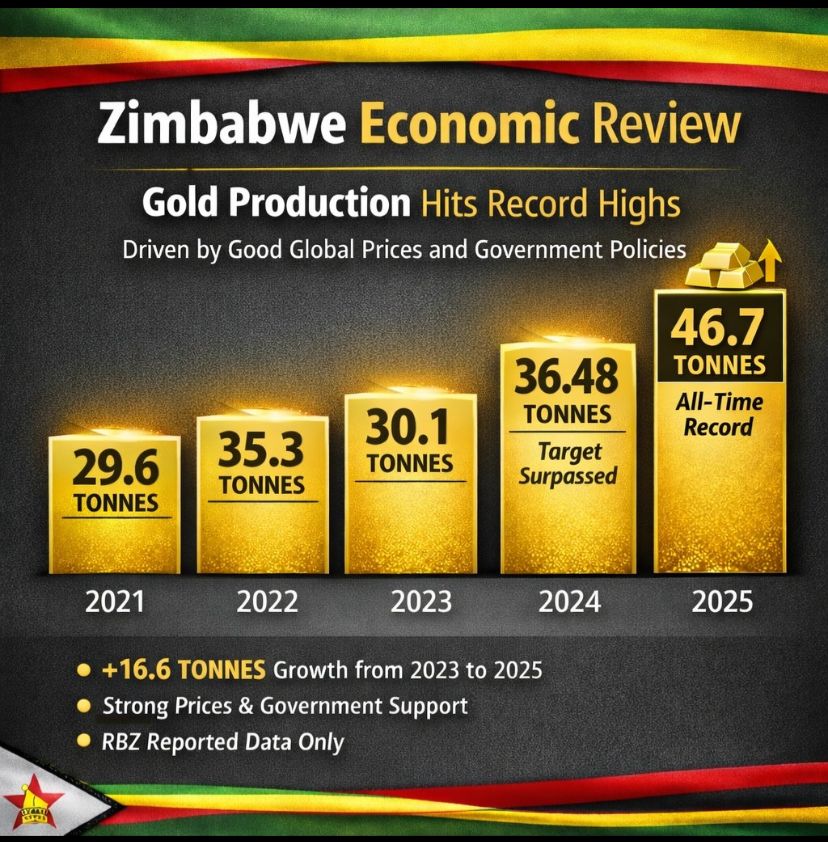
Official figures show production climbed from 30.1 tonnes in 2023 to 36.48 tonnes in 2024. Output then jumped again to an all time high of 46.7 tonnes in 2025.
The gains mark the fastest sustained expansion in the country’s gold sector in decades.
The surge follows steady growth earlier in the decade. Zimbabwe produced about 29.6 tonnes in 2021 and 35.3 tonnes in 2022.
Momentum slowed in 2023 but rebounded strongly in 2024 when production exceeded official targets. By 2025 output had risen by more than 16 tonnes in just two years.
Authorities and industry analysts point to a mix of global and domestic factors. Strong international gold prices improved margins for producers. Policy measures by the government also played a role including incentives to deliver gold through formal channels and tighter controls on smuggling.
Gold is Zimbabwe’s single most important mineral export. It provides a critical source of foreign currency for an economy that has long struggled with shortages of hard cash. Higher output therefore has direct implications for fiscal stability and the balance of payments.
Most of the increase has come from a combination of large scale mines and small scale producers. Artisanal and small miners account for a significant share of Zimbabwe’s gold deliveries, often operating in rural areas with limited access to capital. Formal buying arrangements have helped draw more of their production into official markets.
Globally gold is valued for its rarity, durability and resistance to corrosion. It has been used as a store of value for thousands of years and remains a key asset for central banks and investors during periods of economic uncertainty. Unlike industrial metals, demand for gold is driven as much by investment and jewelry as by industrial use.
Zimbabwe sits on part of the ancient greenstone belts of southern Africa, geological formations known to host gold deposits. Mining has taken place in the country for more than a century, though output has fluctuated sharply due to economic instability, power shortages and policy shifts.
The latest record suggests a period of relative stability for the sector.