


Health Reporter
THE National AIDS Council (NAC) has reaffirmed its commitment to ensuring that no community in Matabeleland South is left behind in ongoing HIV and AIDS interventions, calling on local journalists to champion accurate, stigma-free reporting.
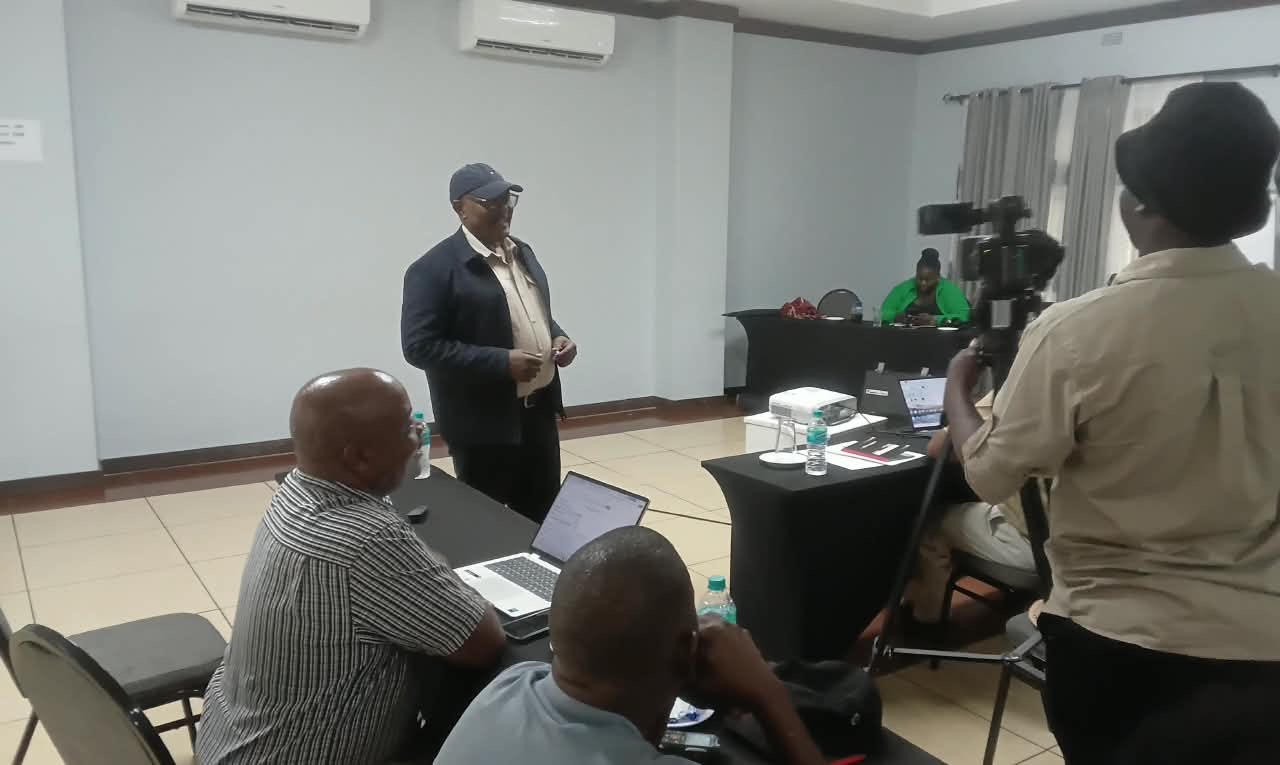
Speaking at a capacity-building training session for journalists drawn from across Matabeleland South, NAC Provincial Manager Mgcini Sibanda said inclusive programming and responsible media coverage are critical to reversing the province’s high HIV burden.
Matabeleland South continues to record the highest HIV prevalence rate in Zimbabwe at approximately 15 per cent—well above the national average of around 9.8 per cent.
Districts such as Bulilima, Mangwe, and Gwanda face particularly elevated rates driven by cross-border migration to South Africa and Botswana, artisanal mining activities, and socio-economic vulnerabilities affecting adolescent girls and young women.
Sibanda said NAC’s community-based outreach models are deliberately designed to reach remote and marginalised populations.
“Our mandate is clear: no place and no person in Matabeleland South will be left behind in our HIV and AIDS interventions. Whether a community is in a remote ward along the border or in an informal mining settlement, prevention, testing, and treatment services must reach them equally.”
Sibanda further said sustainable progress in the health sector depends on institutional alignment with national priorities. He said for any civil society organisation, partner, or stakeholder to be truly effective, its programmes must operate in sync with the Government of Zimbabwe’s broader development agenda, including the National Development Strategy (NDS) and Vision 2030.
“No organisation works in a vacuum. For any intervention to be impactful and sustainable, it must follow the Government’s development blueprint. When partners align their resources and strategies with national frameworks, we are likely to succeed,” he said.
The workshop, which drew 10 reporters from Ilanga, Batethe FM, Ntepe Manama FM, Lotsha FM, The Herald, The Chronicle, Zimbabwe Broadcasting Corporation, and Ziyah News Network, dwelt on the strengths of correct terminology in driving the programmes.
NAC Programmes Assistant for Bulilima Limbongisani Khumalo said the media is critical in shaping public perception and health-seeking behaviour.
Khumalo, who delivered a paper on terminology, said the use of correct, people-centred terminology is not merely a matter of semantics, but a vital tool directly driving the success of HIV and AIDS programmes.
He said some judgemental terms—such as labelling individuals as “HIV carriers”, “victims”, or “sufferers”—reinforce shame and fear.
“Using respectful, accurate language like ‘people living with HIV’ restores dignity and encourages community acceptance,” he said.
Earlier, Sibanda told journalists to act as strategic partners in the provincial response, noting that every accurate story published or broadcast brings Matabeleland South closer to ending AIDS as a public health threat by 2030.
Provincial Information Officer for Matabeleland South Austin Nyathi, who is leading the journalists, said it is important to properly headline stories and include accurate statistics in reporting