


Staff Reporter
EXPANSION of small-scale irrigation and piped water infrastructure has become a critical lifeline for food security and livestock survival in Mangwe District, an arid Natural Region Five area where erratic rainfall frequently threatens rural livelihoods.
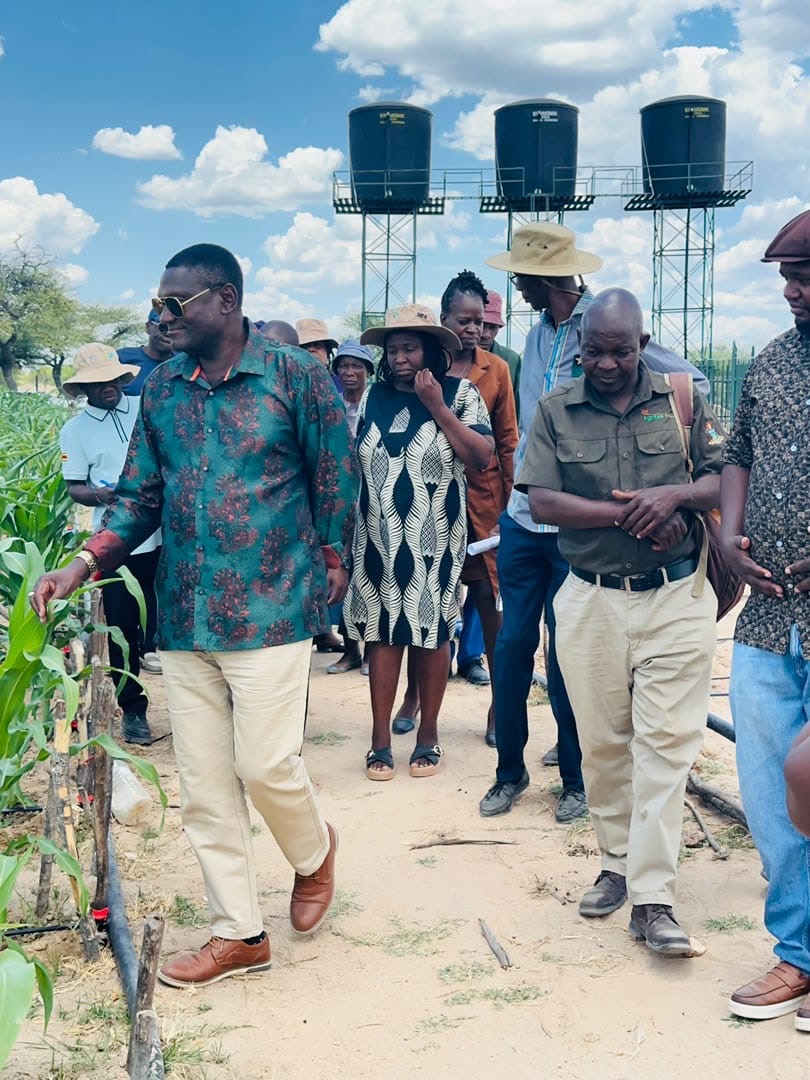
The push for climate-smart water solutions took centre stage Friday when the Minister of State for Provincial Affairs and Devolution for Matabeleland South Albert Nguluvhe commissioned the Phathisanani Multi-Purpose Piped Water Scheme and toured the Keme Piped Water Scheme in Ward 6.
Located in Zimbabwe’s semi-arid Natural Region Five, an agro-ecological zone characterised by low annual rainfall and high temperatures, Mangwe is largely dependent on irrigation and water harvesting to sustain crop production and livestock farming.
Speaking during the commissioning Nguluvhe said the urgency of replicating innovative water projects across dry districts to mitigate drought effects and strengthen household food security cannot be overemphasised.
“Development must begin with communities identifying their needs and participating in finding solutions,” Nguluvhe said.
He applauded the use of sand abstraction technology to tap into seasonal riverbeds.
He said other dry areas with suitable rivers should adopt similar approaches to unlock year-round water access.
At the Keme Piped Water Scheme, sand abstraction technology is already transforming agricultural output.
Funded by charity water and implemented by GOAL Zimbabwe alongside the District Water and Sanitation Sub-Committee, the scheme feeds potable water to Keme Primary School and surrounding homesteads while feeding a community nutrition garden currently producing maize.
Previously, villagers walked up to seven kilometres to fetch water from the Mangwe River and Keme borehole, leaving little capacity for productive gardening or livestock watering.
The newly commissioned Phathisanani scheme, a project where villagers pooled R35 000 to buy solar-powered infrastructure from GOAL, will supply clean water to 105 households and sustain roughly 3,000 cattle and small stock.
The installation features 18 solar panels, two 10,000-litre storage tanks, eight tap points, and a dedicated livestock drinking trough.
Local leaders, including Chief Sangulube, Mangwe Rural District Council Chairperson Mr Mpofu, and Rural Infrastructure Development Agency Provincial Head Mr Ndlovu, attended the event, reaffirming stakeholder commitment to decentralising rural infrastructure development.
With reliable water infrastructure reducing dependence on rain-fed agriculture, authorities say community-led irrigation remains central to building sustainable livelihoods across Matabeleland South.