


American Astronauts Travel Furthest From Mother Earth… As China Flies Water-Powered’ Airplane
By Arezki Amiri /Rex Mphisa (foreword)
As USA citizens Reid Wiseman, Victor Glover, Christina Koch, and Canadian Jeremy Hansen flew 406 771km away from mother earth, and USA and Israel on one side fought Iran resulting in the death of thousands including children, China flew a plane for just 36 kilometres running it on water.
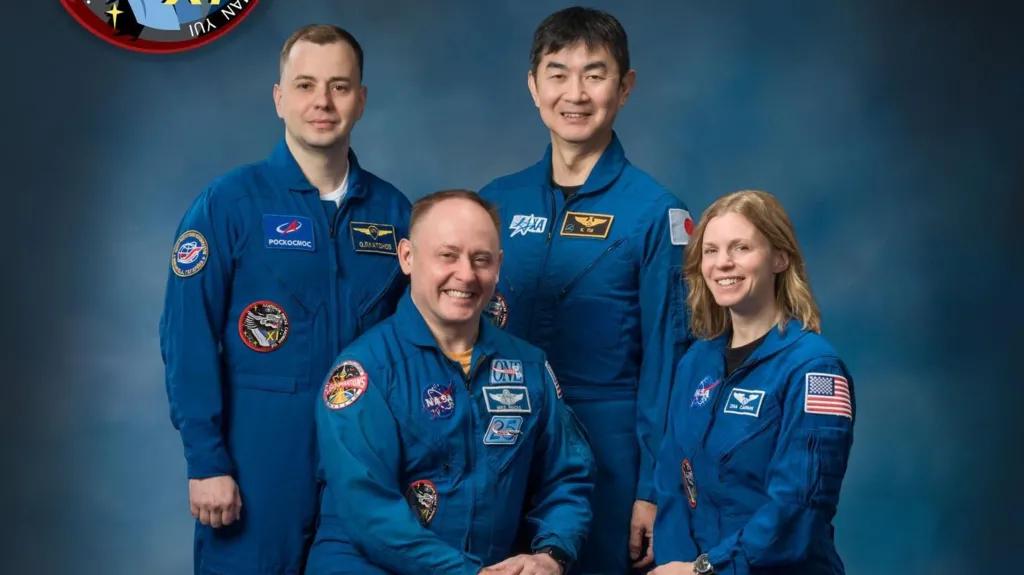
Wiseman and his crew in their 10 day expedition did what could change the world’s future, according to space enthusiasts, who believe the mission proved humans can operate in deep space, directly supporting future landings.
But some believe the Chinese 36 kilometres flight of a crewless plane for 16 minutes could forever change the world perhaps making it a better place.
Imagine driving your car on water, anyone will tour the world.
It appears a fairy tale but the The Daily Galaxy reported that as the world oil fights reigned supreme in April, the Chinese flew a water-powered’ airplane.
China says it flew the plane powered by water, but the real story behind the test flight and the fuel inside is even more surprising than it sounds.
“The aircraft lifted off from an airport in Zhuzhou, climbed to 300 meters, and stayed aloft for 16 minutes,” read the report by journalist Arezki Amiri.
By the time it landed, China had completed the world’s first test flight of a megawatt class hydrogen turboprop engine.
The 7.5 tonne unmanned cargo aircraft carried the AEP100 engine, developed entirely by the Aero Engine Corporation of China. It covered 36 kilometers at 220 kilometers per hour.
The engine operated normally throughout, maintaining stable performance from takeoff to landing. After completing all scheduled maneuvers, the aircraft returned safely to the airport.
What makes this test different from most Western hydrogen aviation projects is what happened inside the engine.
The AEP100 burns liquid hydrogen directly in a turbine cycle, similar to how conventional jet engines burn kerosene. It does not use hydrogen fuel cells to generate electricity for electric motors.
“Airbus has taken the opposite path. The European manufacturer selected hydrogen fuel cell technology for its ZEROe project, which aims to bring a hydrogen powered commercial aircraft to market by 2035,” wrote Amiri.
Fuel cells convert hydrogen into electricity through a chemical reaction, producing only water vapor as exhaust. Airbus has tested a 1.2 megawatt fuel cell demonstrator on the ground but has not yet flown a full scale hydrogen combustion engine on an aircraft.
But China chose direct combustion for a specific reason. Turbine engines offer higher power density and scalability, which matters for larger aircraft. The challenge is managing the fuel. Hydrogen burns hotter than kerosene and requires storage at cryogenic temperatures near minus 253 degrees Celsius.
The AEP100 uses liquid hydrogen, and keeping it cold enough during flight remains one of the engineering hurdles.
ZEROe aircraft will feature an electric propeller propulsion system powered by hydrogen fuel cells, which transform the hydrogen into electricity through a chemical reaction. Image credit: Airbus
AECC experts said the successful flight demonstrates that China has established a complete technological chain for hydrogen aviation engines, covering everything from core components to full engine integration.
The April 4 flight did not occur in a vacuum. Global energy markets have been under pressure. Reports cite disruptions related to Iran and their impact on oil transit routes including the Strait of Hormuz. The International Energy Agency announced the release of 400 million barrels of strategic reserves. Brent crude prices rose sharply.
Chinese state media and AECC experts frame hydrogen as both an environmental measure and an energy security tool. For Beijing, reducing dependence on imported fossil fuels has become a stated priority, particularly for aviation, where kerosene remains the dominant fuel and electrification is not yet practical for long haul flights.
The timing also reflects a longer strategic view. A peer reviewed paper published in the Chinese Academy of Engineering’s journal outlines a national roadmap for hydrogen aviation power.
The authors, researchers from AECC Hunan Aviation Powerplant Research Institute, set phased goals: key technology validation by 2028, regional aircraft applications by 2035, and widespread use in mainline commercial aircraft by 2050.
The new plane will initially be used for freight and island logistics come first.
“Do not expect to board a hydrogen powered passenger jet soon. According to AECC experts cited by Xinhua, the technology is expected to enter service first in what officials call the low altitude economy, unmanned air freight, island logistics, and cargo routes where infrastructure can be controlled more easily than at major passenger airports.
The immediate challenges are substantial. Real world operating costs remain unknown. Hydrogen refueling infrastructure at airports does not exist outside experimental settings. Certification for passenger flight will take years.
Although the April 4 test lasted only 16 minutes, long enough to prove the engine works but not long enough to answer questions about durability, maintenance intervals, or fuel efficiency at scale, it is one more step towards emission-free flights across the universe.
The academic paper from the Chinese Academy of Engineering identifies specific technical hurdles: integrated aircraft engine design, precise hydrogen metering and control, thermal management of cryogenic fuel systems, and stable low emission combustion.
The authors also recommend establishing a national hydrogen aviation development alliance, creating safety and standards systems, and accelerating airport hydrogen infrastructure.
While China pushes direct combustion, Airbus continues developing its fuel cell architecture. The company has partnered with more than 220 airports worldwide through its Hydrogen Hubs program to address production, storage, and distribution.
The two approaches may eventually meet. Airbus previously explored hydrogen combustion before selecting fuel cells as its primary path in 2025. The company has stated it does not rule out future investment in combustion technology. China, for its part, continues to research fuel cells for smaller aircraft applications.
For now, each path has its own timeline. Airbus targets 2035 for a commercial fuel cell aircraft. China’s AECC has not announced a target date for passenger service but has stated that as green hydrogen production costs fall, hydrogen aviation engines will show growing economic advantages.
Who is the author, Arezki Amiri?
Arezki is an Editor-in-Chief and Project Manager based in Japan, specializing in science and technological innovation. Originally from Algeria, he holds a Foreign Languages Diploma from Lycée Zamoum Mohamed, a BA in English from Université Mouloud Mammeri de Tizi Ouzou, and a Nursing Diploma from the Bel Air Institute in Boghni. Bridging science, communication, and humanity, he explores how space research and emerging technologies shape the future of health and society, leading global editorial projects at The Daily Galaxy that translate complex ideas into engaging, cross-cultural stories.