


By Rex Mphisa
THE Beitbridge Municipality is inviting investors to exploit opportunities offered by the mighty Limpopo riverfront where scenic and uniqueness of the town’s location presents a site where tourism, horticulture and water sports are possibilities.
Beitbridge town’sits on approximately 40 of the 1750 kilometres long river that meanders between Botswana, South Africa, Zimbabwe and Mozambique on its course to the Indian Ocean.
Town Clerk Loud Ramakgapola believes the transit town can pivot a sleeping rare tourism product mixing agriculture, historic attractions, vast wildlife distributions, diverse cultures and a resurgent beef industry hinging on the river.
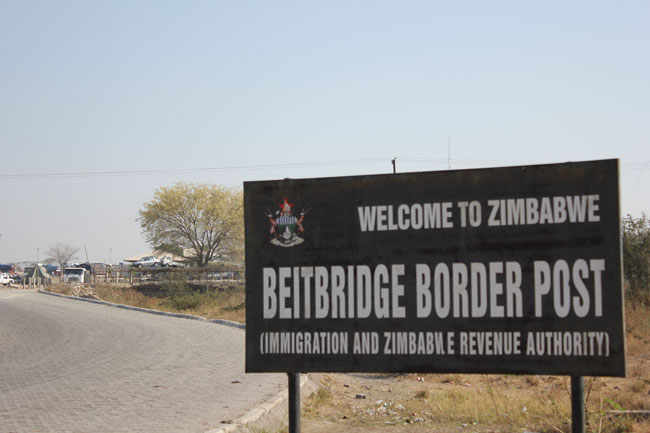
Beitbridge town is home to the only official border between SA and Zimbabwe, located at the centre of the 280 kilometres stretch of the river forming the physical boundary between Zimbabwe and South Africa.
“We are saying we have a river other towns do not have. We have to show the difference and think outside the box to transform the town into various possibilities the river offers. We are in a unique space and we have to exploit this resource,” Ramakgapola said.
“Riverfront development will blow a different winds of economic change. We have been reliant heavily on the border but we have to accept the challenges and continue surviving. Let us diversify, and be realistic other towns offer shipping business which was our lifeline,” he said.
Of the 60 000 people of the town, three quarters are heavily reliant on shipping and other businesses involving cross-border movements.
Business is of late slow due to other routes like Mutare’s Forbes border post, Plumtree and Kazungula taking part of the traffic.
“Land has been set aside and budgeted for development along the Limpopo River. Our local development plan has reserved the river frontage as land for recreational activities . We have already allocated some pieces of land for such but a lot more is available,” he said.
Recent developments in the small town, including the $300 million upgrade of the border post by Zimborders Consortium has seen people coming to view the border finished with granite stones reminiscent of the Great Zimbabwe Monuments making it a tourist attraction.
Several government officials from countries the region have toured the border just to experience its imposing structure and simple but effective traffic separation.
Besides, the old Alfred Beit Bridge 472 metre-long steel girder bridge is a pleasant historic site placed alongside the wider New Limpopo Bridge (NLB).
The bridge was built in 1929 at a cost of $600,000 and financed jointly between the Beit Railways Trust and the South African Railways while the NLB opened by Robert Mugabe and Nelson Mandela, the late presidents of Zimbabwe and SA respectively, was designed and built by Bulgarian engineers to become the first known build-operate-transfer project in Africa.
But it is the picturesque of the mighty Limpopo that remains unmatched as an attraction.
Just under the two bridges a large pool forming from a weir stretches more that three kilometres creating a boating and water games zone.
That is besides natural existence of hundreds of crocodiles and an occasional sight of hippos in natural habitat.
From the confluence of that river with the Mzingwane, the river runs on granite formations whose split at the Dulibadzimu Gorge explain nature’s greatness.
“You are aware the Musina Municipality, our twin, and ourselves have in place a deal to create a cultural village near the Dulivhadzimu Pool. That joint venture is only waiting to go on the ground but paperwork is done,” said Ramakgapola.
The Dulivhadzimu (Place Of The Gods) Pool is a sacred place of worship where preparatory rainmaking ceremonies were held ahead of the major functions at Njelele in Matobo.
Already enterprising businessman Terry Mulowa operates a game park with lions and other animals near the sacred pool. That park records visits from schools, ordinary people and adds to the tourism appeal of the border town.
Town planning expert and lecturer at one of Zimbabwe’s universities Dr Nicholas Muleya said several advantages exist for riverfront development at Beitbridge.
“Its largely the unique human multisensory experiences that exist like panoramic views, natural sounds and views, the microclimate (temperature, breezes, humidity) etc. It of course has its disadvantages like flooding, rockfall or mass-movements,” he said.
Dangerous animals such as crocodiles, hippos, baboons, birds and river bucks whose corridors might be blocked creating wildlife – human space conflicts add to the picture although these can be advantages too, he said.
A security expert said building up of the riverfront would create safety for many people harmed by criminals taking shelter in the banks and the bridges on the river.
“Some criminals have turned the river into their homes. Some people live in the inspection channels under both bridges and that is a security risk,” said the expert who asked for anonymity.
In other civilisations riverfront development has positively transformed the economic statuses of town’s where they exist.
The Yangtze River Delta in China today, it is one of that country’s most important metropolitan areas and is home to China’s financial center, as well being as a tourist destination and a hub for manufacturing ranging from textile to auto making. In 2024, the Yangtze Delta had a GDP of approximately US$4.7 trillion.
India’s rapid economic growth and social development are intricately linked to its ambitious infrastructure projects on riverfront developments.