


By Chantelle Muzanenhamo
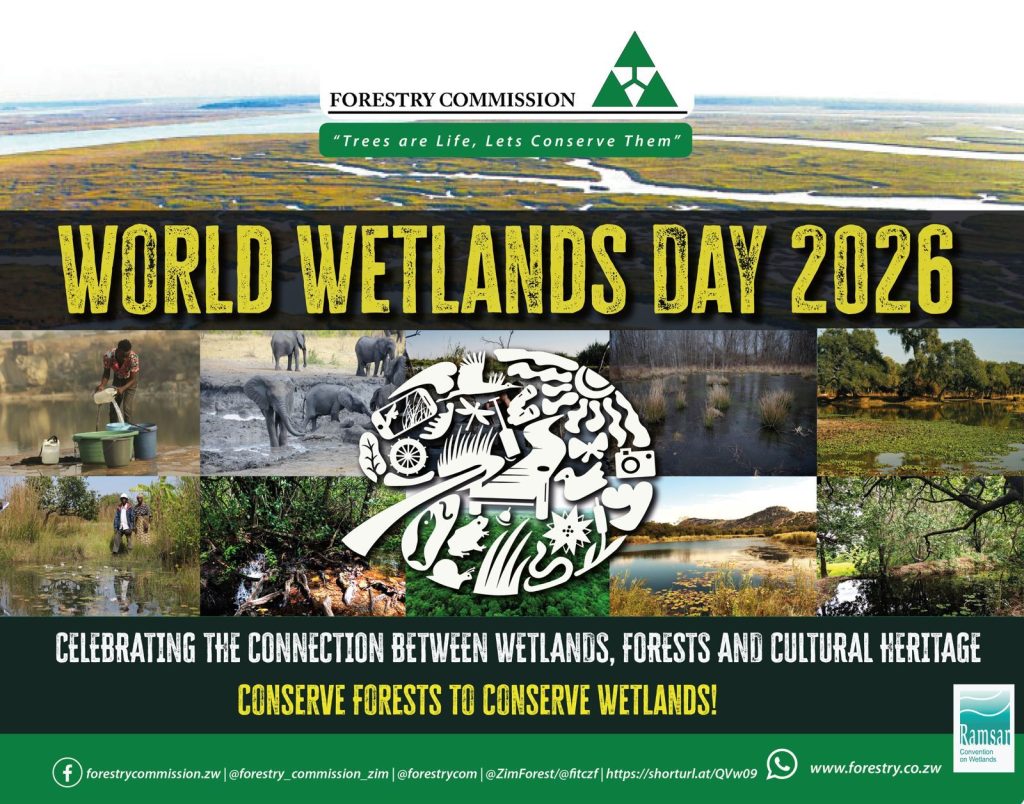
THE Forest Commission of Zimbabwe has joined the global community commemorate World Wetlands Day today, highlighting the critical role wetlands play in sustaining both nature and human livelihoods.
A wetland is a transitional ecosystem between land and water, defined by soil that is periodically or permanently saturated with water, which drives specific vegetation and animal life. They function as natural sponges that store floodwaters, filter pollutants to clean water, and serve as vital carbon sinks.
World Wetlands Day is observed annually on February 2 annually to raise awareness about the importance of wetlands and the urgent need to protect them from degradation and loss.
Wetlands are among the world’s most productive ecosystems, supporting rich biodiversity, regulating climate, and providing essential resources such as food and water.
This year’s celebration, #WWD2026, is being held under the theme: “Wetlands and Traditional Knowledge: Celebrating Cultural Heritage.”
According to the Forest Commission, the theme seeks to shine a spotlight on wetlands as vital ecosystems that support biodiversity, help regulate the climate, and sustain community livelihoods.
The Commission also emphasized the importance of indigenous wisdom, cultural practices, and local knowledge in the protection, management, and sustainability of wetland environments.
“Wetlands are not just ecosystems, but also vital cultural landscapes that have provided food, water, and identity to people for generations,” the Commission said in a post on their Official Facebook account.
The theme further draws attention to how traditional practices can contribute to protecting biodiversity and addressing climate challenges.
As part of its message, the Forest Commission called on the public to recognize the close link between forests and wetlands, urging collective action toward conservation.
“Conserve Forests to Conserve Wetlands!” the Commission stressed.
World Wetlands Day serves as a reminder that safeguarding wetlands is essential not only for environmental health but also for preserving cultural heritage and securing the future of communities that depend on these ecosystems.