


By Rex Mphisa
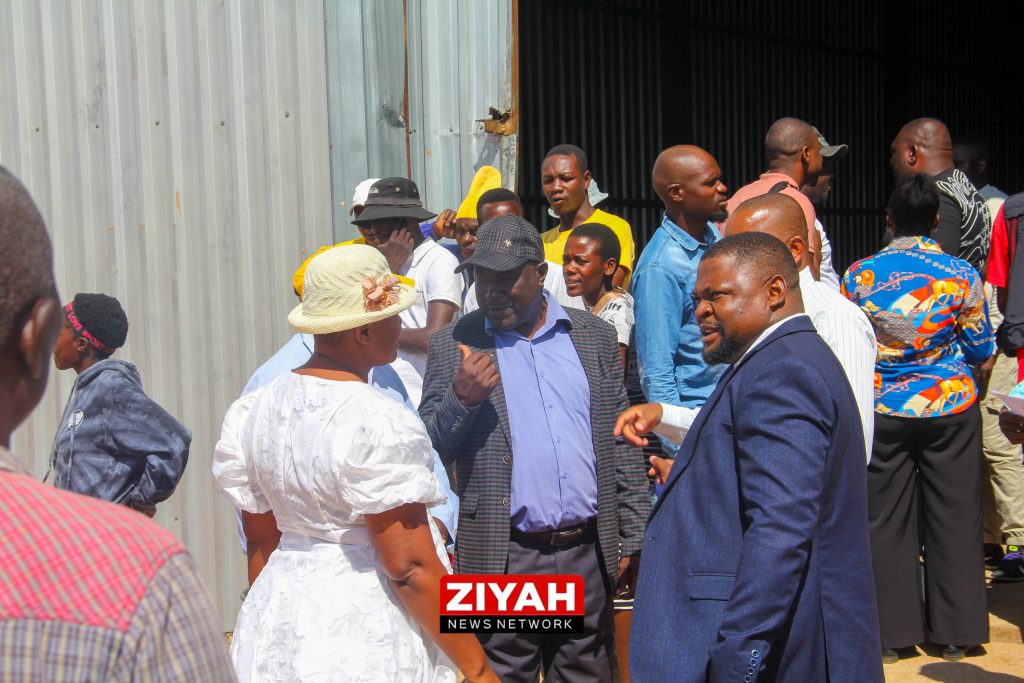
JUST two out of the vast dissenting voices on the Beitbridge social media groups took to the stage to say their views against the Constitutional Amendment Bill Number 3 but their voices were easily drowned in a well organised public hearing at Lutumba on Thursday.
Bhekimpilo Mbedzi, who more often than not was advised by the chairman of the Parliamentary Committee Tinashe Mushipe to keep in the lane, said he hoped the bill had provisions for a referendum instead of public hearings.
Mushipe however quickly reminded Mbedzi that even though his contributions were important, he was expected to address the clauses in the proposed bill for which the gathering was.
“Honourable member, you are reminded again to address the clauses of the Constitutional Amendment Bill Number 3. You are expected to quote the clause you are agreeing or disagreeing with and give reasons,” Mushipe reminded Mbedzi on parliamentary fashion witnessed during the three-hour long public hearing.
Mbedzi went back to the topic but quickly strayed out to refer to the referendum which is not in any of the clauses under discussion at the public hearing, the last of many held countrywide.
His other coleague Adline Mhuri appeared crowd shaken and did not properly articulate himself in the packed hall where the hundreds drawn from the different parts of Beitbridge gave a nod to the proposed new law.
He spoke on the rights and freedom of the pele needing to be implemented and he said extending the terms to seven years because if they failed in five years there is nothing they could do in seven.
But the two were overwhelmed and left the hall halfway after everyone of the 17 contributers after them supported the amendment.
However, on the noisy residents groups the two were the only ones who spoke out.
Some people attending the hearing said their participation showed transparency in the process.
Basically most supported the bill saying tangible development projects are at hand and the President and his teams in councillors and legislators must proceed to 2030, extending their term period by two years.
Many of the contributors said allowing traditional leaders participation in politics was important to preserve culture.
Based on the Constitution of Zimbabwe Amendment (No. 3) Bill, 2026 (H.B. 1, 2026) gazetted on February 16, 2026, the proposed legislation contains several clauses designed to make wide-ranging changes to the 2013 Constitution.
While some sources indicate 24 key provisions, the comprehensive draft aims to restructure key governance institutions.
Key proposed clauses and changes include:
Clause 2 (Presidential Election): Repeals Section 92, replacing direct popular election with election by a joint sitting of Parliament.
Clauses 3, 7, 8 (Term Extension): Amends Sections 95, 143, and 158 to increase the period of terms of office for the President, Parliament, and local authorities from five to seven years.
Clause 4 (Vice President): Deletes the word “first” before “Vice President”.
Clause 5 (Attorney General): Replaces “High Court” with “Supreme Court” regarding qualifications for the Attorney General.
Senate Expansion: Allows the President to appoint 10 additional senators for their professional skills, increasing the Senate size.
Independent Commissions: Abolishes the Zimbabwe Gender Commission (transferring functions to the Human Rights Commission) and the National Peace and Reconciliation Commission.
Voters’ Roll Transfer: Shifts responsibility for the voters’ roll from the Zimbabwe Electoral Commission (ZEC) to the Registrar-General.
Traditional Leaders: Amends constitutional restrictions to allow traditional leaders to participate in partisan politics.
Defense Forces: Amends Section 212 to change the requirement for the Defence Forces to “uphold” the Constitution to “in accordance with” it.