


By Chantelle Muzanenhamo
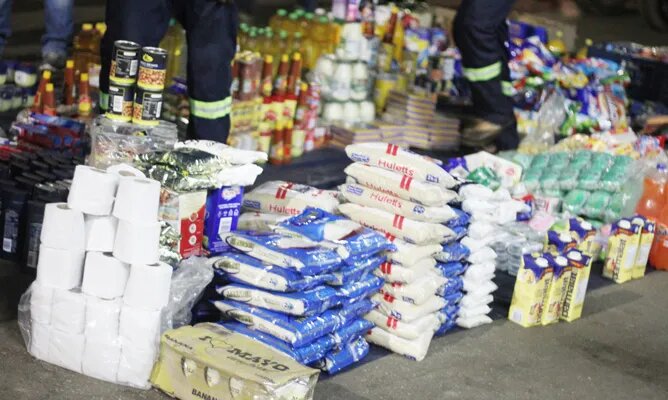
Villagers residing near border towns in Matabeleland South Province have been urged to cease the unlawful practice of leasing storage facilities to smugglers. The Zimbabwean government, in a renewed effort to combat smuggling, plans to deploy a specialized task force to address this growing issue.
The warning follows reports that locals are either knowingly or unknowingly facilitating smuggling operations by providing storage space for contraband goods.
Addressing the pressing matter at the Zimbabwe Revenue Authority (ZIMRA) Container Depot in Bulawayo, Presidential Affairs and Devolution Permanent Secretary Engineer Tafadzwa Muguti highlighted the challenges presented by the region’s porous borders.
“We are aware that we have got porous borders as a country,” Muguti stated.
“Some villagers along the borders are now leasing out storage space to smugglers, and we will deal with them decisively,” he added.
Muguti noted that the anti-smuggling campaign, which began in September of last year, will be a permanent part of the government’s strategy to bolster the economy and protect the livelihoods of Zimbabweans.
He dismissed claims suggesting that the crackdown has political motives, asserting that it is fundamentally about economic stability rather than partisan interests.
The official emphasized Matabeleland South is a particular area of concern, given its proximity to South Africa and Botswana and acknowledged a previous lack of enforcement in the region.
“We have directed Matabeleland South to ensure that they enforce much better and also to ensure that we utilize the drone technology that we have now deployed within ZIMRA across our borders,” he remarked.
Additionally, the government has introduced stricter penalties for smuggling activities.
“From now going forward, you smuggle something into the country, we catch you, we forfeit it to the State, and that becomes a State asset,” Muguti explained.
The government’s crackdown targets not only individual smugglers but also seeks to bolster local industries by limiting the influx of inexpensive foreign goods, such as second-hand clothing.