


By Patience Gondo
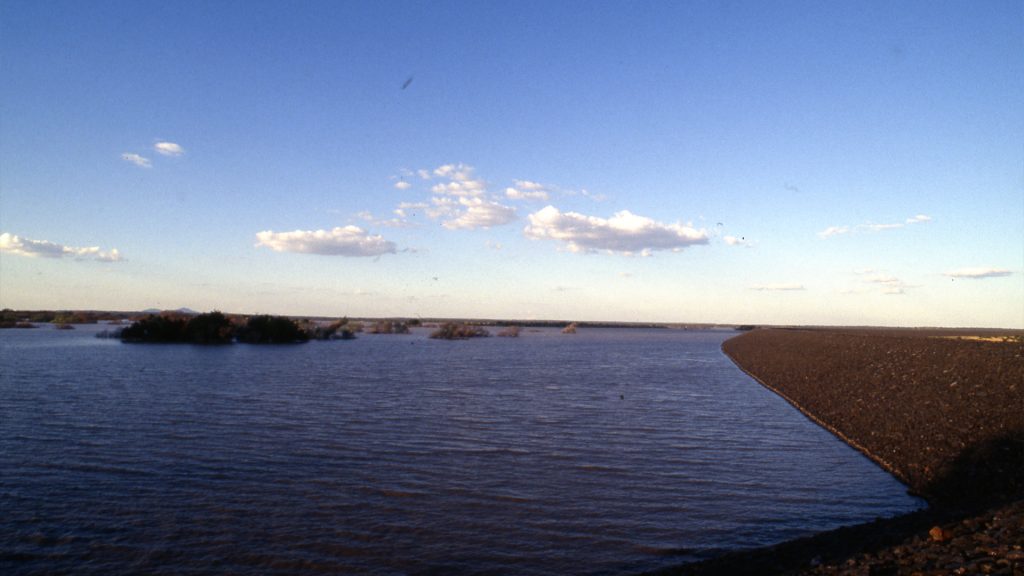
BEITBRIDGE residents are yet to benefit meaningfully from Zhove Dam, more than three decades after the massive water body was built to transform agriculture and water supply in the district.
The issue emerged on Tuesday during a development meeting where stakeholders raised concern that the dam has not fulfilled the purpose for which it was constructed.
Zhove Dam was built between 1993 and 1995 on the Umzingwane River in Matabeleland South.
The 133-million cubic metre structure stands about 44 metres high and stretches over 2.3 kilometres. It was designed to provide irrigation for commercial and communal agriculture while also supplying municipal water to Beitbridge town.
However, despite its size and potential the dam is largely underutilised.
There is no canal system to channel water from the dam to farming areas in Beitbridge and not enough irrigation equipment .
This is despite a $25 million funding from Kuwait meanr to develop a water channel and irrigation scheme downstream.
As a result, most local farmers cannot access the water needed to support large scale farming.
Permanent Secretary for Monitoring and Evaluation in the Office of the President and Cabinet Nditwani Muleya, said the situation contradicts the development potential the dam was meant to unlock.
“We do not expect people of Beitbridge to cry of hunger when we have such a big dam like Zhove,” Muleya said.
“The river should benefit the people of Beitbridge. Zhove Dam must change people’s lives through farming.”
Muleya said the availability of water should translate into improved livelihoods, modern housing and better education opportunities in line with the country’s Vision 2030 development agenda.
“Better houses should be built. We need modern houses, not thatched huts structures. With proper use of the dam, people can improve their lives and educate their children,” he said.
Muleya said despite the presence of the dam, thousands of Beitbridge residents still depend on food aid during drought periods.
During the 2023 drought, Beitbridge received grain to support more than 44 000 people.
“You are better off than people in areas like Binga who do not have a dam,” Muleya said. “Honestly, it does not tally. Make use of the dam.”
Zhove Dam has the capacity to irrigate about 7 000 hectares of land, but only around 350 hectares are currently under communal irrigation.
Officials from the Zhove said the low utilisation is largely due to the absence of canals that would distribute water to farming areas.
Muleya said local authorities and stakeholders should engage the Minister of Lands, Agriculture, Fisheries, Water and Rural Development, Anxious Masuka to facilitate infrastructure that can unlock irrigation potential at the dam.
She also said the district should explore tourism opportunities around the dam to generate income for the community.
Stakeholders from the Zhove dam were encouraged to work with the Minister of Tourism and Hospitality Industry, Barbara Rwodzi through the Minister of State for Provincial Affairs and Devolution for Matabeleland South, Albert Nguluvhe, to promote investment at Zhove Leisure Park Lodge.
Muleya said this move could help turn the dam into a centre for agriculture, tourism and economic activity while improving livelihoods in Beitbridge.