


By Ziyah News Network
THE idiom “killing two birds with one stone” (often modified as “hitting two birds with one stone”) clearly means achieving two different goals or tasks by a single action.
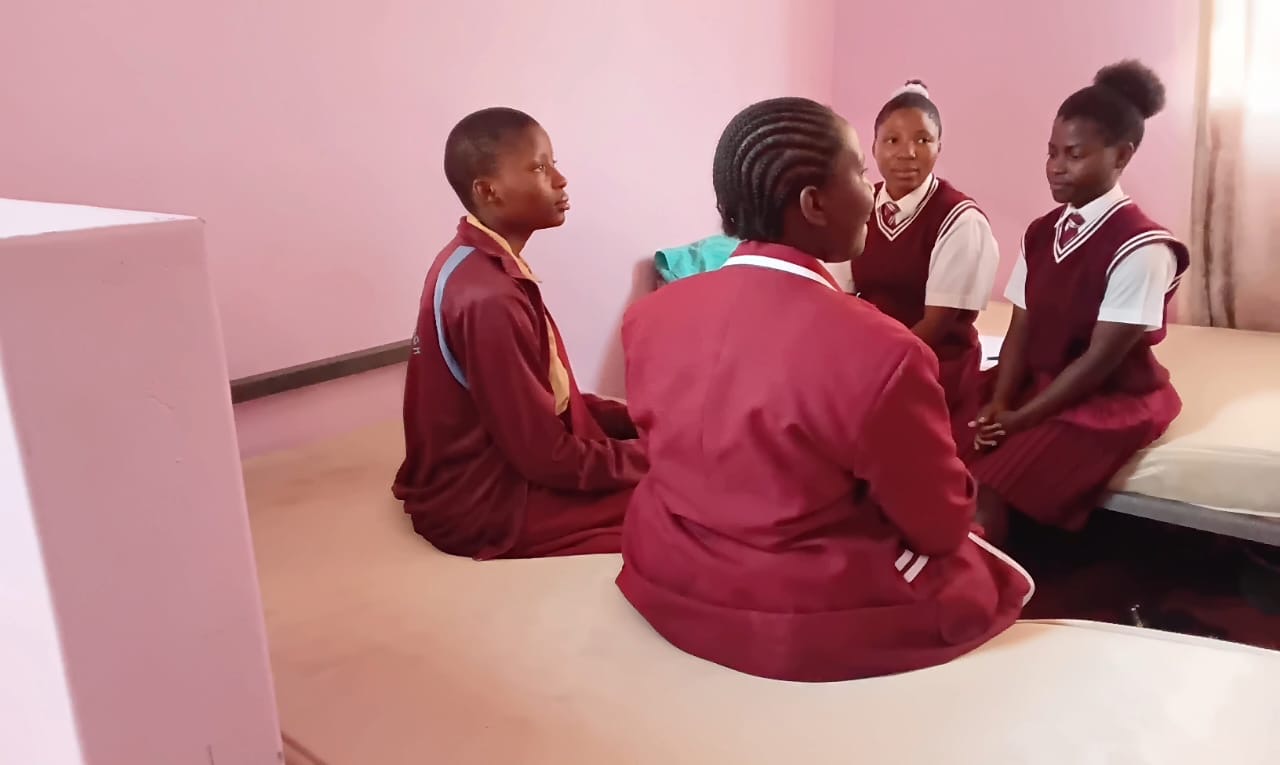
But the National Aids Council (NAC) of Zimbabwe in Matabeleland South has rewritten the idiom with its girls hostels at Sihlengeni and Bayethe Secondary schools in Mzingwane District, two masterstrokes in their own right.

During a recent media tour of the two hostels, Mzingwane District Aids Coordinator Mduduzi Ngwenya said the game-changing low-cost structures were established by his organisation to provide a safe, supportive, and affordable living environment for vulnerable adolescent girls.
Set deep in gold-rich communities where disposable cash by small scale and artisanal miners have fueled HIV and Aids hotspots, driven young girls out of school and caused pains for mothers and fathers, the two hostels have brought unprecedented positive results.
“We did these in partnership with Plan International and the Global Fund. The media is free to hear from beneficiary communities about the impact these inteventions have had,” said Ngwenya.
The hostels are open plan structures that accomodate 32 girls and are solar powered. They have all facilities
In his district numerous gold mining activities fuel the spread of HIV and AIDS by creating transient work camps as miners move from place to place in search of gold.
Along the way the nomadic miners have often enticed young women and adolescent girls from different circumstances like child-headed families luring them out of school into casual short period multiple relations.
Umzingwane district has its HIV prevalence rate at 13.3%, exceeding Zimbabwe’s national adult HIV prevalence average of approximately 9.8% and has about 8 000 people affected with most aged between 16 and 25.

Headman Mpofu,
Headman Mpofu, an experienced Zimbabwean educationist and schools Inspector said the hostels were a challenge placed on different schools administrations for the protection of the girl child and betterment of results.
“We have seen how these hostels have helped the learning process of the girls and we feel it must even be provided for boys. We appreciate everyone who makes the learning environment conducive,” Mpofu said addressing journalists at Bayethe Secondary School.
Earlier another educationist Thuthani Nkomo said the two hostel fastilities filled a void that existed in the system by placing the importance of protection of the vulnerable children.
“We are talking about girls who walk 16 to 20 kilometres to school and by the time they get there they are tired and you cannot expect them to be doing well. This facility (Sihlengeni) made sure they are not exposed and their quality of results, life skills and goals will be realised,” said Nkomo.
NAC’s aim to reduce the prevalance of HIV and Aids by building the dormitories had dovetailed well with the fight against teenage pregnancy, early school dropout and communities could now celebrate improved results from girls, said Nkomo.
Nqabutho Sigola, the Headman in the village where Sihlengeni Hostel stands said far away from NAC’s objectives, the girls boarding houses have shown the community it is possible to build low cost hostels.
“We are encouraged. Even though it is our wish to have them stay longer and build more hostels, the truth is our eyes have been opened and we will build more hostels on our own. Even if there is no employment and our children go into artisanal mining, they will be educated artisanal miners who will mine responsibly. We should have these facilities even for boys,” he said.
Sigola’s sentiments were repeated some 60 kilometres east of Sihlengeni and Bayethe Secondary school established in an eqally acive mining area.
Deputy School Development Committee chairperson Sikhumbuzo Gumbo, 58, said they are eager to have a boarding facility like thegirls’ at Bayethe Secondary school
“Our girl child results have improved from just 14 percent to an amazing 50 percent. It is good news to us and we owe this remarkable feat to the boarding facility we see here today,” she said with a broad smile.
“We should extend this to the boy child whose learning should also be conducive, asier and friendly. Our boys travel long distances and it is particularly hard during the rainy season,” she said.
Bayethe is located in between what was vast land belonging to settler farmers that has since been turned into resettlement areas.
Because of the thin population in the district with 71,860, according to the latest official national Zimbabwe Population Census, schools are few and far apart.
This forces students to use buses and other modes of transport to school. Most walk.
“Its not always that they have fares for transport so the attendance is affected,” said Gumbo.
Back at Sihlengeni one of the beneficiaries 15-year-old Medium Makomborero Shumba said her dream to be a cardiologist is within reach.
“I have adequate time to study, I was top of my class and had distinctions in my last tests. I am just shrpening Mathematics which I have enough time for. Yes I want to be a doctor, a cardiologist to be specific,” she told Ziyah News Network.
“I was staying far away from school and like a girl, I had chores which ate away my school time. At this facility I am able to do my chores, do the garden for our food and have adequate time with my books,” she said.
Her speech was full of freedom and peace.
The models at Sihlengeni and Bayethe hostels anchor on safety by placing the hostels directly inside or adjacent to secure school boundaries where gates are always locked.
They are removed the access of the common people and once vulnerable students breathe safe air from predatory elements like cash loaded artisanal miners blamed for the the spread of HIV and Aids in gold rich environments.
“We hope this intervention can speak to other stakeholders who can take a leaf from this and spread it, replicate it to other communities where similar circumstances exist. We hope journalists are able to articulate this intervention by NAC so that the goals are achieved countrywide,” Mgcini Sibanda, the Matabeleland South NAC manager said.
He was addressing journalists from different media houses who embarked on the three day informative tour.
As one of the girl students at Bayethe Secondary School hostel locked the gates soon after te convoy of vehicles carrying the entourage of journalists, NAC, Plan and Education officials reporters broke into various conversations.
But the hostels remained structures that show how collaboration has been able to address so many fronts in NAC’s mission to provide strategic leadership and coordination for a sustainable multisectoral HIV and AIDS response in Zimbabwe.