


By Chantelle Muzanenhamo
Farmers in the Gwanda-Tshitaudze constituency are being encouraged to adopt the Pfumvudza infiltration pits farming technique, a vital strategy for enhancing agricultural productivity and ensuring food security in light of ongoing climate challenges.
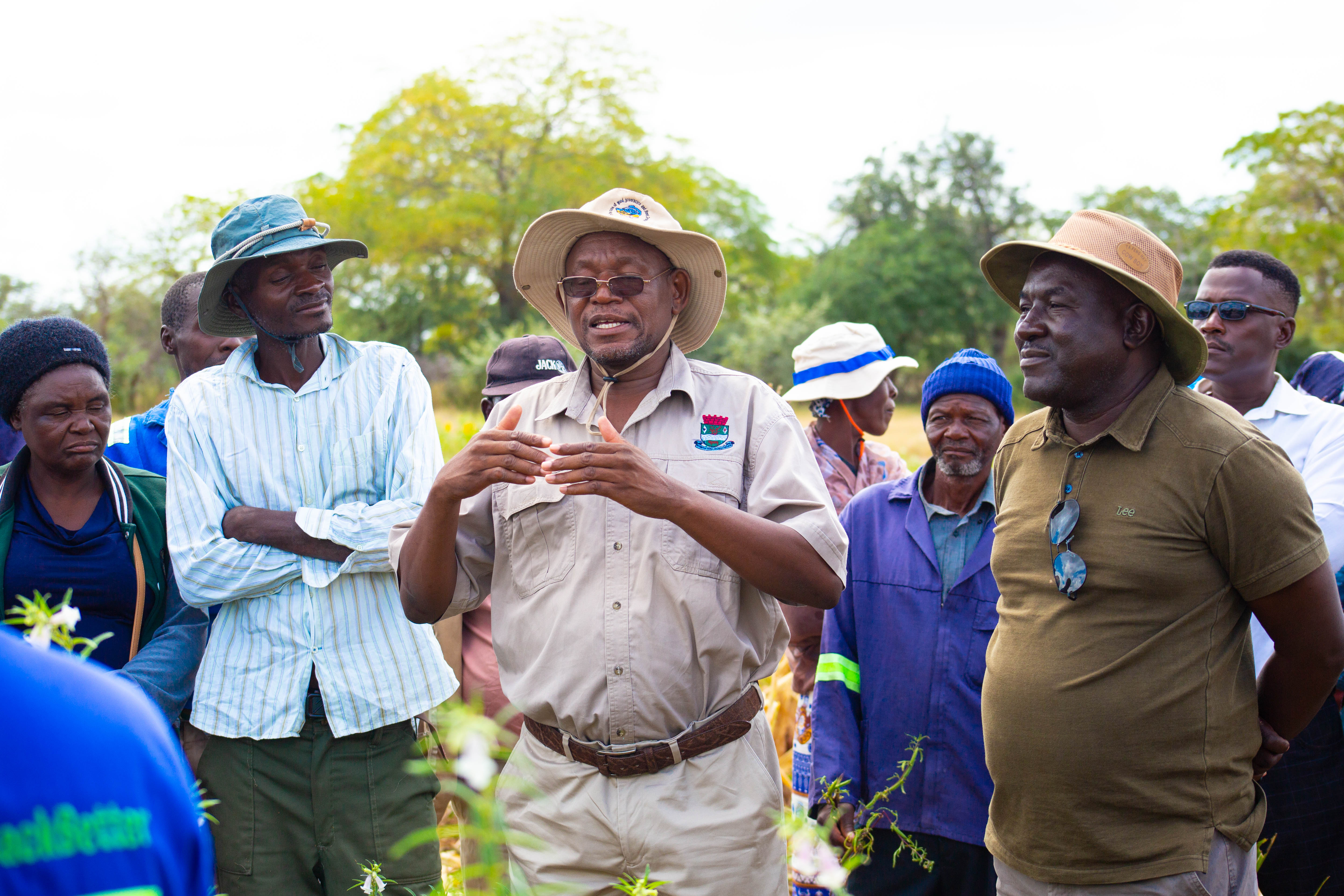
The call to action came during the Pfumvudza Field Day held in the Majini area, where local farmers gathered to learn about innovative farming practices suited for the low veld region, which is currently grappling with increasingly erratic rainfall patterns.
Farmers who attended the field day, were educated on the comparative benefits of using Pfumvudza plots with infiltration pits versus traditional farming techniques.
Victor Gumbi, an artisan with the Department of Agricultural Engineering Mechanization and Soil and Water Conservation, demonstrated the process of creating and effectively utilizing the infiltration pits to conserve water for future use.
He emphasized the critical need for such practices in regions where rainfall is inconsistent.
“Infiltration pits help in conserving water for future use, especially in this area where rain is not constant. These will act as water banks, keeping the soil moisturized and feeding the plants,” Gumbi stated.
He highlighted that if constructed properly with the correct methods and measurements, these pits can retain water for up to two weeks, providing a notable advantage in drought-prone areas.
Farmers were urged to register with their ward supervisors to access essential equipment and knowledge from the Ministry of Agriculture, ensuring they can fully benefit from the Pfumvudza initiative.
Steven Shoko, a local farmer who successfully grew sorghum using Pfumvudza infiltration pits, shared his experience to motivate fellow farmers.
“I can attest to the benefits of using these pits. My sorghum crop thrived, and I encourage my fellow farmers to adopt this method. It truly yields better results,” Shoko remarked.
Thusani Ndou, the Member of Parliament for Beitbridge West, commended the farmers for their resilience and hard work while also urging the government and the Ministry of Agriculture to enhance support for the local farming community.
“While I am pleased with the efforts our farmers are making, I call upon the government to drill boreholes in every village. Access to more water is essential to improve yields and to fulfill President Emmerson Mnangagwa’s vision of leaving no place and no one behind as we strive towards Vision 2030,” Ndou expressed.
As the climate crisis continues to unfold, the adoption of innovative farming practices such as Pfumvudza infiltration pits may prove to be vital for the sustainability and productivity of agriculture in Gwanda-Tshitaudze, ensuring food security for the region’s communities.