


By Chantelle Muzanenhamo
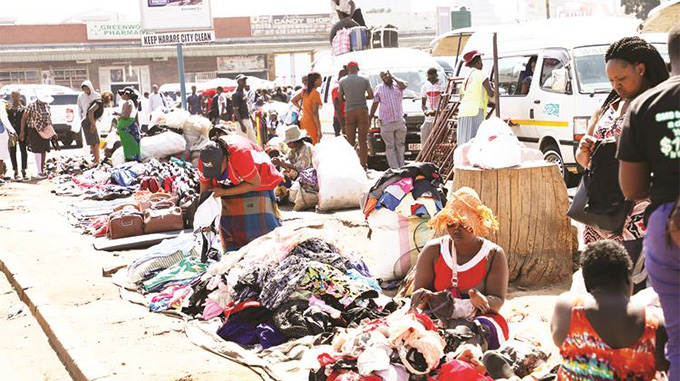
Harare – The Zimbabwean government has banned the sale of second-hand clothing in all central business districts (CBDs) across the country, a move that has sent shockwaves through informal trading communities and low-income households that depend on the industry for survival.
Announced on Monday by Minister of Local Government and Public Works Daniel Garwe, the sweeping ban also prohibits night vending and the importation of second-hand clothing, effective immediately.
“All local authorities must enforce this ban immediately. There will be no vending at night and no selling of second-hand clothing in CBD areas,” said Garwe, who also ordered the City of Harare to coordinate with law enforcement for rapid implementation.
While the government insists the crackdown is aimed at restoring order, supporting formal businesses, and curbing illicit drug sales linked to night markets, the move has severe implications for informal traders who rely on selling second-hand clothes commonly known as mabhero to feed their families.
For years, the second-hand clothing sector has been a vital source of income for thousands of small-scale vendors. Many of these individuals are breadwinners, sustaining multiple dependents through daily sales in busy urban areas. Entire households, especially in high-density suburbs, have built livelihoods around this trade — from cross-border buyers and local resellers to tailors and street hawkers.
Moreover, second-hand clothes have long provided affordable clothing options for millions of Zimbabweans, many of whom cannot afford retail prices in formal shops. The ban now threatens to limit access to basic necessities for lower-income groups who have relied on mabhero for everything from school uniforms to winter wear.
Critics argue that instead of addressing the root causes of informal vending such as high unemployment and economic instability the government is punishing the vulnerable.
“This ban risks destroying an entire micro-economy that sustains families and clothes the nation,” one informal trader said. “Where are we supposed to go now? What are we supposed to eat?”
Economists have also cautioned that without viable alternatives or social support mechanisms, the ban could drive more people into poverty and informal backdoor markets, undermining the very law and order the government is seeking to promote.
In defending the decision, Minister Garwe claimed that street vending undercuts formal retailers who are registered and pay taxes. He also linked night vending to the rise in drug and substance abuse, arguing that unregulated markets have become breeding grounds for criminal activity and health risks.
However, no specific data was provided to quantify these claims, leading to calls for greater transparency and a balanced approach that doesn’t cripple already struggling citizens.
As enforcement begins, eyes are on how local authorities will handle the transition and what provisions, if any, will be made for displaced traders. Civil society groups and trade unions are expected to challenge the measures or lobby for designated vending zones to accommodate informal businesses.
For now, uncertainty looms over the future of a sector that has not only dressed the nation but also kept thousands employed amid ongoing economic hardship.