


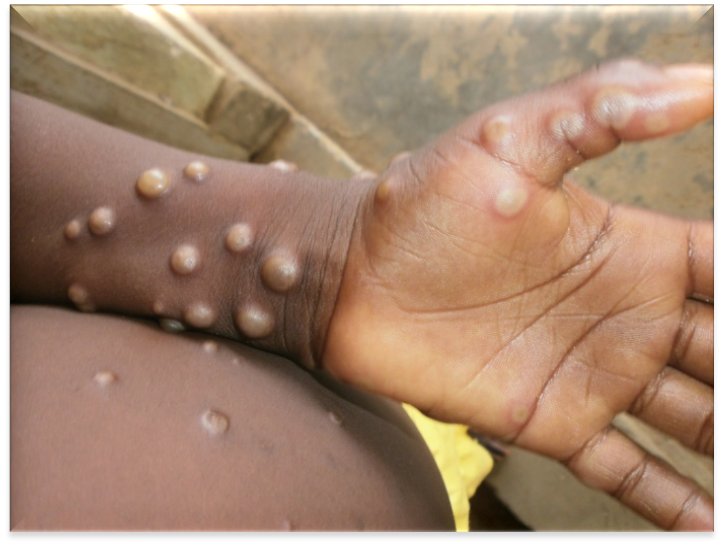
The World Health Organization on Wednesday declared monkey pox a global public health emergency for the second time in two years, following an outbreak of the virus in parts of Africa.

That comes as health officials also warn of a sharp rise in cases in Toronto.
On Tuesday, the Africa Centers for Disease Control and Prevention announced that the mpox outbreaks were a public health emergency, with more than 500 deaths so far this year, and called for international help to stop the virus’s spread.
“Today, the emergency committee met and advised me that, in its view, the situation constitutes a public health emergency of international concern. I have accepted that,” WHO director-general Tedros Adhanom Ghebreyesus said at a Wednesday media conference. “This is something that should concern us all.”
Determining a disease outbreak as a “public health emergency of international concern” — the WHO’s highest level of alert — can accelerate research, funding and international public health measures and co-operation to contain a disease.
Originally identified in monkeys in 1958, mpox, previously known as monkeypox, was primarily confined to central and western Africa, and transmitted through close contact with infected animals. However, a shift occurred in 2022 when the virus spread rapidly among people worldwide, including Europe, North America and beyond.
Mpox belongs to the same family of viruses as smallpox and causes similar but generally milder symptoms.
The latest health and medical news emailed to you every Sunday.
While not considered strictly a sexually transmitted infection, it is spread through contact with bodily fluids or scabs and contaminated personal items like clothing, bedding, sex toys or toothbrushes, according to Toronto Public Health.
About this mpox outbreak
Mpox is characterized by two distinct genetic groups called clades: I and II. These clades have evolved separately over time and display different genetic and clinical features.
The outbreak in the Democratic Republic of Congo (DRC) began with the spread of Clade I. But a new variant, Clade Ib, appears to spread more easily through routine close contact, including sexual contact. It has spread from Congo to neighbouring countries, including Burundi, Kenya, Rwanda and Uganda, triggering action from the WHO.