


By Chantelle Muzanenhamo
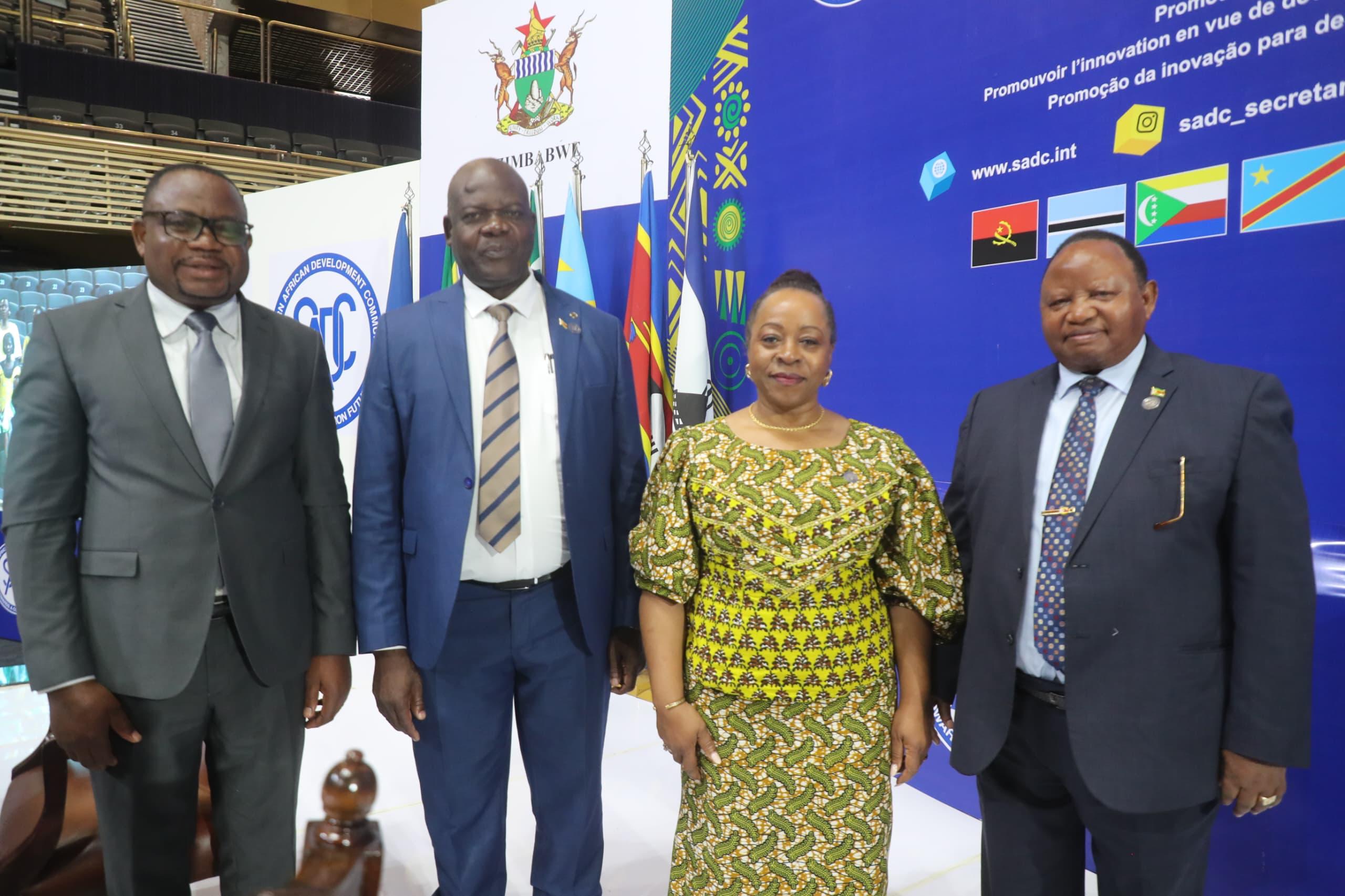
Harare, Zimbabwe – In a powerful call to action, the Honourable Minister of Primary and Secondary Education, Dr. T. Moyo, officially opened the SADC High-Level Ministerial Round Table Dialogue at the Harare International Conference Centre, urging regional leaders to confront the enduring challenges in foundational literacy and numeracy.
“Education is the cornerstone of sustainable development, and foundational literacy and numeracy are the bedrock upon which all further learning is built,” Dr. Moyo declared.
“Yet, across our region, millions of children still lack access to these basic skills, a challenge exacerbated by disparities in resources, infrastructure and teacher capacity.”
The dialogue, hosted under the auspices of the Southern African Development Community (SADC) and attended by education ministers, policymakers, and development partners, aimed to assess regional progress on early-grade learning while forging unified strategies to close persistent learning gaps.
Dr. Moyo emphasized the urgency of the discussions, framing them not as routine deliberations but as a “call to action.” He highlighted the importance of aligning regional efforts with the SADC Regional Indicative Strategic Development Plan and the United Nations Sustainable Development Goal 4, which targets inclusive, equitable, and quality education for all.
He commended the region’s progress in expanding access to education but stressed that more must be done.
“Our work is far from complete. As Ministers and leaders, we must champion policies that prioritise early-grade learning, invest in teacher training, and harness innovation to reach marginalised communities,” He noted.
Zimbabwe’s own efforts to bolster literacy featured prominently in the Minister’s address. Dr. Moyo recounted the nation’s longstanding commitment to education, which has earned it recognition for having one of the highest adult literacy rates in Africa.
“Since independence, Zimbabwe has been a leader in promoting adult literacy and early-grade foundational skills,” he said.
“In 2013, we launched the Early Reading Initiative with support from the Global Partnership for Education to enhance teaching in Grades 1 and 2. We were also early adopters of the THRASS programme to improve English literacy among second-language learners.”
He also noted Zimbabwe’s initiative to conduct internal assessments at the end of Grade 2 since 2012—an effort to ensure learners are prepared to advance in their education.
The Minister expressed appreciation to the SADC Secretariat for organizing the roundtable and acknowledged the shared commitment of regional partners.
“Let us engage today with openness, urgency, and a spirit of solidarity. Together, we can ensure that every child in our region has the tools to thrive, contribute to our economies, and drive the transformative change we aspire to see.”
The day’s proceedings featured high-level panel discussions, best-practice sharing, and breakout sessions designed to build a coordinated roadmap for achieving literacy equity across the region.
With those words, Dr. Moyo formally declared the High-Level Ministerial Round Table Dialogue officially open.