


By Chief Reporter
As the people of Zimbabwe await with abated breath for the Monetary Policy (MPC), anxiety and speculation has become the order of the day as the once bitten citizenry anticipate what the new governor, John Mushayavanhu will bring on the monetary table going forward.
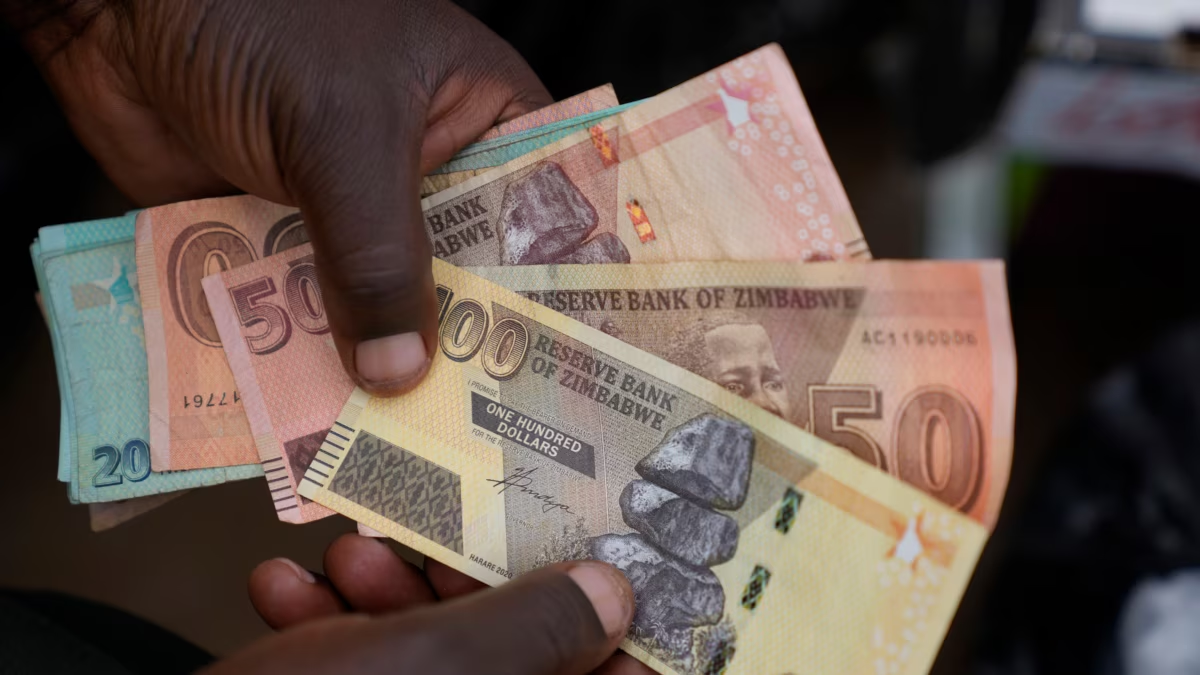
Whilst the President has already hinted on the introduction of a structured currency, it is still unknown what form the currency will take.
Social media has gone ablaze as theories are thrown around to the expectant Zimbabwean public, some have gone on to produce “specimens” of the new currency. But what is structured currency?
By definition, a structured currency combines features of fiat money (actual money we all know) and investment products which includes gold, stock index, real estate performance, foreign currency, commodities market or bond. It is real money linked to an underlying asset like gold, a stock index, or a foreign currency.
For example RBZ issues ZWL 100,000 note pegged to 1 ounce of gold or value of a tonnes of maize, market value of ZWL note tracks gold price or value of tonnes of maize, incorporating daily asset movements. A structured currency, assumes the form of financial derivative, deriving value from an underlying asset.
Some economic analysts have however warned that whilst the structured currency might bring the desired exchange rate stability, it does whittle down the abilities of the Reserve Bank governor to manouvre.
“Structured currency will come with stability definitely. But it will take away a lot of open market operations from the governor. Open market operations involves feeding money into the market to promote growth or reducing money supply to reduce inflation and currency devaluation.”
“The governor will not have power over currency and will be more of a compliance governor making sure banks are operating the right way,” said an economist who preferred anonymity.
According to the economist, one of the Challenges emanating from the structured currency include what we will use for determining underlying value, or the commodity we will use to peg its value to.
” Suppose we peg it to the value of gold, these days gold is firming, this will automatically mean our currency will firm too meaning our good when exported will become expensive hence we won’t be competitive followed by loss of international market.”