


By Rex Mphisa
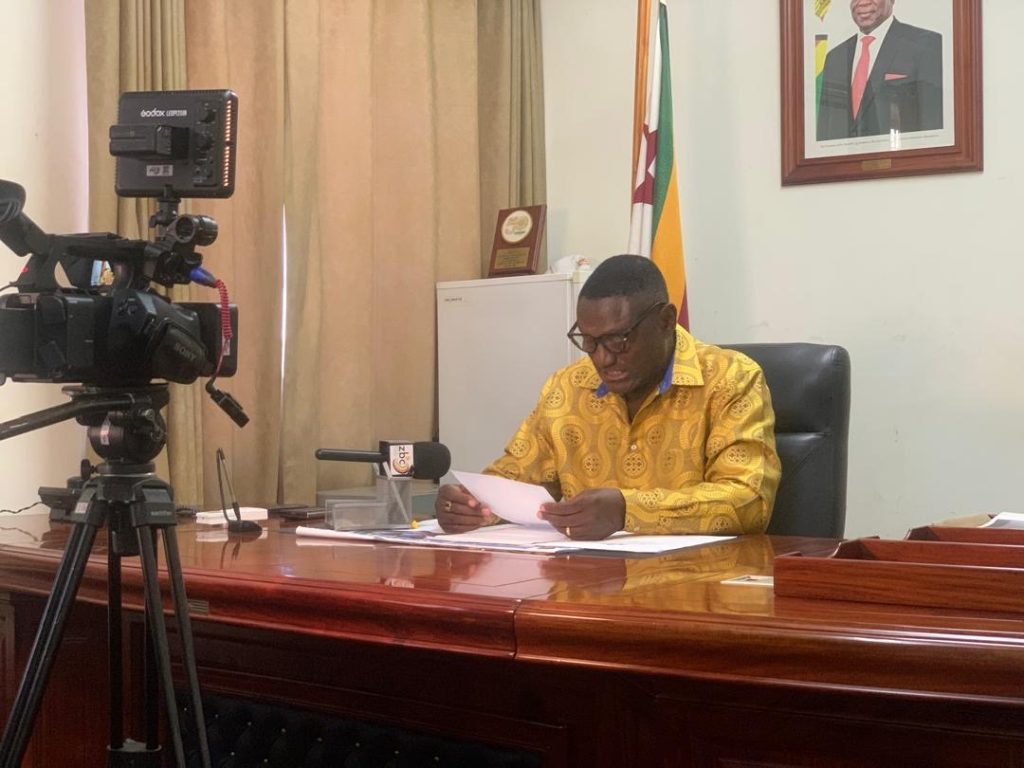
A total of 398 people were arrested for drug related offences and of these 233 were taken to court resulting in 161 convictions in Matabeleland South this year alone.
Of that figure, 169 were females and from the total figure, 165 offenders paid fines at station level, the Matabeleland South Minister of Provincial Affairs and Devolution Albert Nguluvhe has said.
He said in those arrests 119 were identified as suppliers and these included a larger figure of women standing at 61.
In a press conference on Tuesday Nguluvhe attributed the successful arrests to interventions by Government anchored on Supply and Demand Reduction as two separate pillars of intervention with Harm Treatment and Rehabilitation, and Community Reintegration as the other.
Already Matabeleland South has been mobilising funds for drug rehabilitation centres.
“I am honored to address you today on the progress our province has made in the fight against drug and substance abuse, an issue that continues to pose a serious threat to the social, economic, and moral fabric of our communities,” Nguluvhe said.
“Allow me at the outset to underscore that the strides we are making are in line with the vision and firm commitment of His Excellency, the President of the Republic of Zimbabwe Emmerson Dambudzo Mnangagwa, whose leadership under the Second Republic has placed the fight against drug and substance abuse among the top national priorities.”
Nguluvhe said Government commitment is reflected in the whole-of-government and whole-of-society approach implemented countrywide where structures are in place to cell level.
“Our interventions are anchored on four key pillars: Supply Reduction, Demand Reduction, Harm Treatment and Rehabilitation, and Community Reintegration,” said Nguluvhe.
Under the Supply Reduction Pillar the province managed intensified law enforcement efforts to disrupt supply chains and bring perpetrators to justice.
In the Demand Reduction Pillar Government remains committed to reducing the demand for drugs through empowerment, rehabilitation, and community-based support systems.
Already three survivors were enrolled for skills training under Young Africa while another two successfully graduated in solar installation.
“One regrettably relapsed, highlighting the need for sustained support systems,” said Nguluvhe.
Seven female survivors were trained under the Msasa Project in basic counselling and first-line support.
“These are now actively supporting fellow survivors through Mobile One Stop Centres in Madabe, Nguwayana, and Sanzukwi in Mangwe District. Furthermore, 21 youths identified as survivors are currently undergoing training at Guyu Youth Service Centre, including participants from Mangwe and Beitbridge,” said Nguluvhe.
The initiatives, he said, are critical in restoring dignity, building resilience, and creating alternative livelihoods for affected individuals.
Under the Harm Treatment and Rehabilitation Pillar Matabeleland South made notable progress in strengthening treatment and rehabilitation services, he said.
“A total of 131 victims have been admitted for treatment, tested, and provided with psychosocial support before referral for reintegration services while plans are in place to rehabilitate and upgrade centres, with renovations earmarked for the Old TB Centre in Gwanda and the O.I Clinic in Plumtree. A sum of USD $286 000 was pledged by the National Task Force on Drug and Substance Abuse, upon receipt it can be channeled towards these renovations.”
Nguluvhe said the Provincial Drug and Substance Abuse account currently reflects balances standing at ZWG: $2072.73 and USD $24 241.38.
A borehole has already been drilled at the Gwanda facility to ensure sustainable access to water and a site proposal for a Village Business Unit (VBU) has been done.
Nguluvhe said for Gwanda a hall adjacent to the rehabilitation centre will be converted into a vocational training centre to enhance post-treatment recovery.
“Awareness campaigns have been conducted in churches across the province. Additionally, 27 artisanal peer educators have been trained in Gwanda by the Ministry of Health and Child Care to strengthen community outreach efforts,” he said.
He said reintegration is a key pillar in the fight against drug and substance abuse to ensure survivors transition successfully back into society is smooth.
To date 131 survivors have been discharged from treatment centres and referred back to their respective districts and of these 28 received structured reintegration services across districts with eight for Beitbridge, Gwanda 13, Insiza two, Matobo four and Umzingwane just one.
For advocacy a successful Musical Festival was held in Beitbridge to champion the fight against drug and Substance Abuse, a third edition of its kind held at Lutumba township.
Zimbabwe is currently engaged in a massive, intensified crackdown on drug and substance abuse, declaring it a national emergency and a threat to national security.
The government, led by the Zimbabwe Republic Police (ZRP) and backed by an Inter-ministerial Committee, is implementing a multi-sectoral approach (2024–2030) to curb the rising scourge, which is heavily affecting youth, with roughly 1 in 30 households affected.