


By Patience Gondo
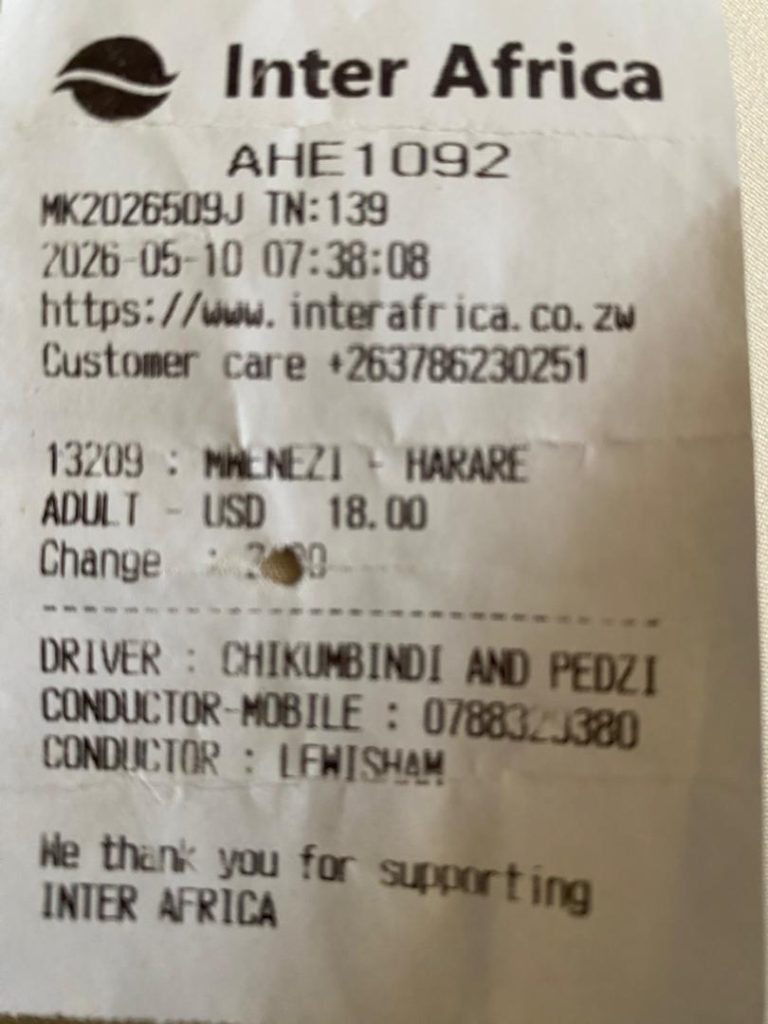
BUS operators from Beitbridge to Harare have increased their fares from from $15 to $18, while those travelling to Bulawayo are paying $20 up from $15 .
Fares to Gwanda currently stand at $15 from $10 according to a survey by ziyah News Network.
Inter Africa, one of the main bus companies operating on the Beitbridge-Harare route, confirmed the adjustment, attributing it to the escalating cost of fuel.
An inter Africa service bus ticket gleaned by Ziyah News Network showed the fare had risen.
The fare hikes follow a surge in fuel prices in Zimbabwe.
Between February 23 and March 23, 2026, petrol prices increased by 39.1%, while diesel costs jumped 35% the highest diesel increase recorded in Africa during the period.
The data comes from a joint report by the United Nations Development Programme, the African Union, the United Nations Economic Commission for Africa, and the African Development Bank titled The Impacts of the Middle East Conflict on African Economies.
The report attributed the increases to the United States-Iran conflict, which raised global oil prices by fueling fears of disruptions to crude oil shipments along key maritime routes.
Zimbabwe’s fuel hikes, however, far outpaced those in other African nations due to domestic factors, including high taxes, currency instability and costly fuel import systems.
Egypt recorded Africa’s second-highest petrol increase at 14.3%, while Morocco saw a 13.9% rise and Sierra Leone 12.3%. Countries such as South Africa, Rwanda, Tanzania, and Lesotho implemented only modest increases.
Zimbabwe National Chamber of Commerce CEO Christopher Mugaga said the country already had some of the region’s highest fuel costs even before taxes and levies.
“Zimbabwe is already about 20% above the regional average on the free on-board price before you even consider taxes and levies,” Mugaga said.
In Beitbridge, transport operators and informal fuel traders report immediate impacts on their businesses.
Informal sellers sourcing fuel from Musina in South Africa have raised prices, reflecting higher procurement costs linked to the global oil shock.
Research firm Equity Axis highlighted that Zimbabwe’s fuel pricing system is increasingly disconnected from regional realities, with fuel sometimes cheaper in neighboring countries than within Zimbabwe itself.
Although the Zimbabwe Energy Regulatory Authority recently reduced fuel prices after the government increased ethanol blending from E5 to E20, petrol still sells at around US$2.08 per litre and diesel at US$2.09 per litre, among the highest in southern Africa.