


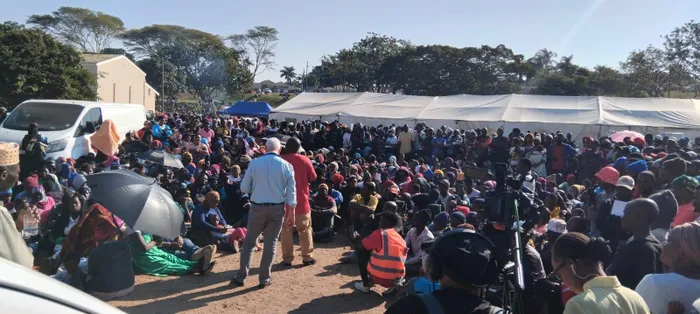
The Malawi government has appealed for financial donations and humanitarian assistance to help bring home thousands of its citizens stranded in South Africa, saying the scale of the repatriation effort has placed unprecedented pressure on its resources.
The appeal comes as Malawi intensifies efforts to facilitate the voluntary return of at least 10,000 citizens, with authorities warning that the humanitarian operation requires significant financial, logistical and emergency support.
“With an estimated 10,000 citizens in distress and awaiting repatriation, the scale and urgency of the operation have created unprecedented financial, logistical and humanitarian demands,” the government said in a statement.
According to the statement, the repatriation programme is being coordinated by the Department of Disaster Management Affairs (DoDMA) in collaboration with the Ministry of Foreign Affairs and International Cooperation, the Malawi High Commission in Pretoria, government agencies, humanitarian organisations and other stakeholders.
Authorities said a comprehensive response has already been activated to ensure the safe, orderly and dignified return of Malawians wishing to leave South Africa.
The government has deployed a task team to South Africa to oversee the registration, verification, protection and repatriation of affected citizens. Emergency travel documentation is also being issued to Malawians who have lost their passports or other travel documents.
The statement further confirmed that the first group of returnees arrived safely in Malawi on 9 June 2026, while additional groups remain in transit as the operation continues.
To support vulnerable citizens, transport operators have been engaged to move Malawians from shelters and affected communities in South Africa to designated departure points. Reception and processing facilities have also been established at Kamuzu Stadium in Blantyre to receive returning nationals.
The government said returnees are being provided with temporary shelter, food assistance, protection services, psychosocial support and onward transportation to their home districts upon arrival.
Despite these measures, authorities acknowledged that the magnitude of the crisis is stretching available resources.
As a result, the government has launched a public appeal for support, calling on development partners, humanitarian organisations, private companies, transport operators, faith-based institutions and individual well-wishers to contribute towards the repatriation effort.
Officials said contributions could take the form of direct financial donations, transportation services, humanitarian relief supplies or other forms of assistance needed to support the evacuation and reintegration of returning citizens.
The government described the repatriation exercise as a national humanitarian mission requiring collective action and solidarity.
“We believe this is a national humanitarian mission that requires the collective effort, compassion and solidarity of all stakeholders,” the statement said. “Together, we can ensure that affected Malawians return home safely, with dignity and hope for a fresh start.”
Meanwhile, the stranded Malawian nationals have challenged their home government over claims of financial constraints, demanding that Malawi’s wealthiest tycoons step in to bankroll their urgent repatriation.
Displaced nationals currently sheltered at the Sherwood Community Hall in Sydenham, Durban, have expressed deep frustration with the slow pace of state-led repatriation. Many argue that if state coffers are empty, Malawi’s ultra-wealthy elite have a moral obligation to intervene.
cc; IOL News