


By Chantelle Muzanenhamo
For years, Beitbridge has been known as a gateway of movement trucks thundering across the bridge, buses packed with travellers from Harare to Johannesburg, and long queues of people and cargo snaking toward the border.
Yet, for all its economic importance, the country’s busiest border town has remained largely disconnected from the skies.
No scheduled passenger flights, no direct air link only road.
That could soon change.
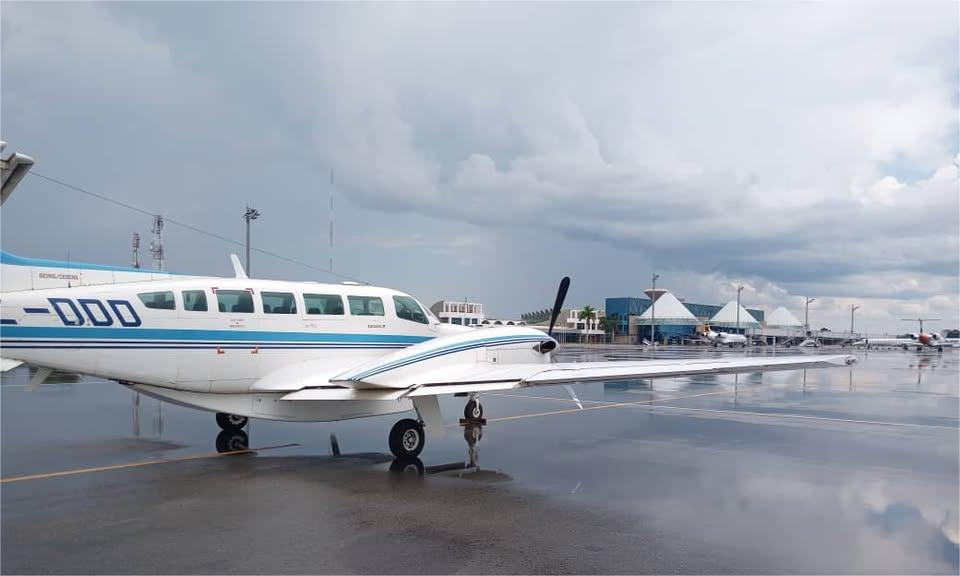
On Thursday, Falcon Airways met with Beitbridge stakeholders at the District Development Coordinator’s (DDC) office to explore the possibility of introducing commercial flights to the border town.
The airline, known for its charter operations in the region, is now eyeing Beitbridge as its next strategic destination.
Accountable manager Monica Chogumaira led the team, saying they had assessed the Beitbridge aerodrome and found it safe for use.
“We are on a consultative interactive visit to raise the interest of stakeholders,” she said.
“Our one-way special price, excluding a $15 departure tax, is $120, and we are expecting to launch our first flight by 31st December.”
The plan signals Falcon Airways’ shift from exclusive charter services to a broader commercial footprint.
Last year, the airline launched its first charter route to Kariba a project Chogumaira says has been successful.
“Beitbridge will be our second launch as it is one of the busiest border towns in the region,” she explained.
Indeed, Beitbridge is no small market. As one of Southern Africa’s key trade corridors, the border handles more than 15,000 travellers and over 500 commercial trucks daily.
For cross-border traders, government officials, and business travellers, the journey by road from Harare roughly 600 kilometres is both long and costly.
A direct flight could cut that journey to hour thirty minutes and reshape how people and goods move between Zimbabwe’s economic centres and the border.
If Falcon Airways succeeds in establishing regular services, Beitbridge’s connectivity could improve dramatically.
Air travel would not only save time but could also attract new investment and improve access to emergency and medical services.
Chogumaira hinted that Beitbridge could eventually be connected to Chiredzi and Masvingo, creating a southern air corridor that supports tourism, agriculture, and trade.
“We aim to come back to Beitbridge with the airplane in two weeks’ time, and if successful, we will consider connecting from Chiredzi and Masvingo as time goes,” she said.
There are, however, practical considerations.
Sustaining commercial flights depends on consistent passenger demand, competitive pricing, and reliable infrastructure at the Beitbridge aerodrome which currently lacks some modern facilities.
Still, Falcon Airways’ initiative suggests growing confidence in Beitbridge’s potential beyond just being a transit town.
If successful, this could be the start of a new transport chapter for the border town one where travellers no longer endure endless road trips and border queues but instead, board a one-hour flight to Harare.
For a place that never sleeps, perhaps Beitbridge’s skies are finally about to open.