


By Chantelle Muzanenhamo
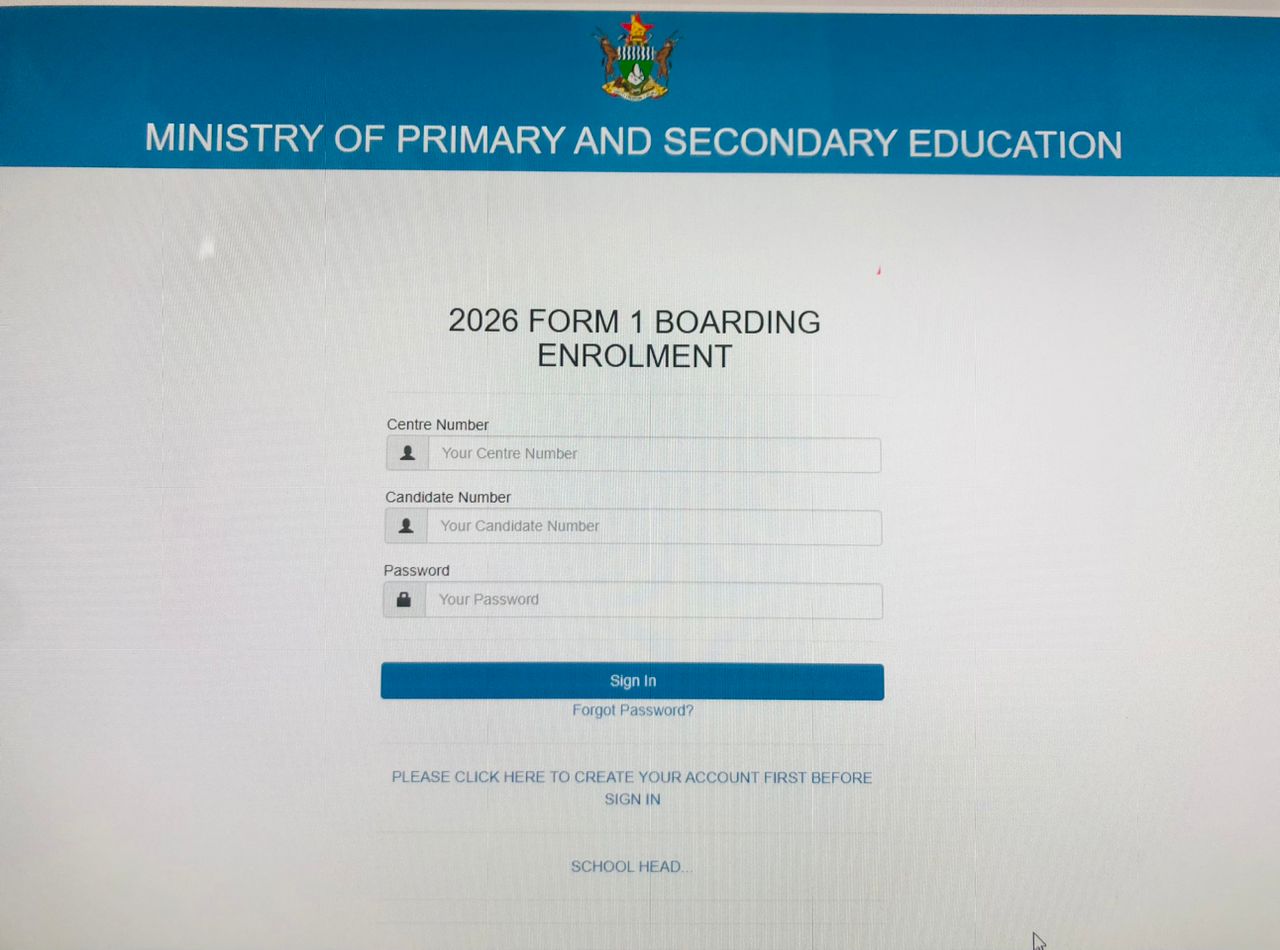
The Ministry of Primary and Secondary Education’s announcement that 2026 Form 1 boarding school applications will be done exclusively online marks another decisive step in Zimbabwe’s digital transformation of education.
According to a statement released on Wednesday, the ministry said:
“The Ministry of Primary and Secondary Education has opened the online application platform (eMAP) for 2026 Form 1 boarding places. The platform can be accessed via http://www.emap.co.zw/Form1Enrol/.”
The statement further explained that parents may apply to a maximum of five schools, and that the system treats all five choices equally, it is a list, not a ranked order.
This development confirms that what once began as a pilot project has now become the standard method for securing Form 1 places in Zimbabwe’s boarding schools.
Physical applications, long queues, and entrance tests are rapidly becoming relics of the past.
Parents no longer have to travel across provinces or spend days submitting applications at different schools.
Through the eMAP system, applications can be completed from anywhere with internet access, and results are communicated instantly through SMS.
This efficiency has not gone unnoticed.
“When a school offers your child a place, you will receive an SMS. The instant your child is accepted by one school, all other pending applications are automatically cancelled,” the ministry outlined.
Such automation reduces human interference, limits favoritism, and brings greater transparency to the placement process.
It also streamlines data management for the ministry, which can now track applications nationally in real time.
However, the same system that empowers some parents also excludes others.
Rural families, in particular, face persistent barriers unreliable internet, limited access to smartphones, and lack of digital literacy.
For them, what appears to be a seamless process on paper can turn into a frustrating ordeal.
Many rely on internet cafés or community helpers to submit applications, which sometimes leads to errors or missed deadlines.
The ministry’s stern warning about declining offers further highlights the system’s unforgiving nature.
“If you choose to decline an offer, you must be aware of the following: the place will be immediately offered to another applicant. You cannot reclaim it. Declining an offer is a final decision,” read part of the statement
While this ensures efficiency, it also raises concerns for parents who might decline an offer due to affordability, logistics, or misunderstanding how the system operates.
For such families, one wrong click can mean losing all placement options entirely.
If online applications are to remain the norm, the government must invest in digital literacy initiatives, expand rural internet coverage, and ensure support systems are available for those who struggle to navigate the platform.
The Ministry concludes its statement by assuring parents that, “Government has enough Form 1 day-school vacancies for every pupil so have alternative day school arrangements in place.”
The move from paper to pixels is inevitable.
But as Zimbabwe embraces digital education systems, it must ensure that every parent whether in Harare or Hurungwe can click their way into the future without being left behind.