


By Patience Gondo
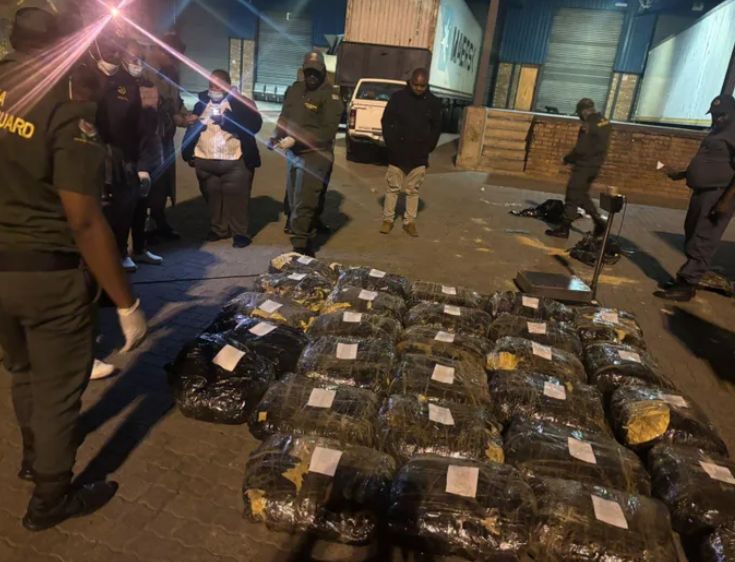
ZIMBABWE is being used as an international drugs and substance destination and transit country, if the US$1 billion drug haul on the SA side of Beitbridge is anything to go by.
According to South African authorities, the truck had travelled through Zimbabwe before being intercepted on the South African side of the border, raising fears that the country was being used as part of a sophisticated regional narcotics trafficking network.
According to reports, three suspects, reportedly two Malawians and a Zambian, were arrested after scanners detected concealed compartments in the truck carrying the drugs.
South African authorities intercepted 713 kilogrammes of methaqualone commonly known as “ABBA” and used in the manufacture of mandrax during an intelligence-driven operation conducted by the Border Management Authority (BMA).
The latest bust has intensified concerns over Zimbabwe’s increasing exposure to international drug trafficking syndicates taking advantage of porous borders and regional transit routes.
A Beitbridge resident Simbarashe Kuvheya said such consignments of such magnitude rarely pass through transit countries without some of the drugs filtering into local markets.
“The shipment could have been intended for distribution within Zimbabwe before the remainder was moved to other destinations,”He said.
Ward 3 Councillor Takavingei Mahachi said he appreciates the police and every one who made the burst of the contraband, drugs are destroying the future generation.
“So I pray that a stiffer punishment must be imposed sending a message to the public that as Zimbabwe we don’t tolerate drugs deals,”
“It is also my thinking that the government of Zimbabwe must appreciate the officers operation who arrested the contraband otherwise they could have accepted personal gains,” he said.
South African Home Affairs Minister Leon Schreiber described the seizure as possibly the single biggest breakthrough against the drug trade in South African history.
The seizure comes at a time Zimbabwe continues battling rising drug and substance abuse, particularly among youths, with crystal meth locally known as mutoriro, mbanje, BronCleer cough syrup and illicit pharmaceuticals flooding communities across the country.
International anti-narcotics agencies have in recent years warned that African countries are increasingly being used by South American and Asian-linked drug syndicates as transit routes and manufacturing bases for synthetic drugs destined for regional and international markets.
Zimbabwe’s strategic location linking South Africa, Zambia, Mozambique and Botswana makes it attractive to organised criminal networks involved in cross-border trafficking.
President Emmerson Mnangagwa is known to maintain a “zero-tolerance” stance on drug and substance abuse, viewing it as a major threat to public health, national security, and the country’s youth.
His administration’s policies and interventions centre around several key actions like the Multi-Sectoral Plan (2024-2030).
Recently Mnangagwa launched this comprehensive national framework to coordinate supply reduction, rehabilitation, community reintegration, and policy enforcement.
He has directed police to ruthlessly destroy illicit supply chains and arrest drug peddlers with no leniency or “sacred cows” and also explicitly warned there is absolutely no room for substance abuse within Zimbabwe’s uniformed forces.
His administration is spearheading the development of public rehabilitation and skills training centers across the provinces and for community awareness Mnangagwa has advocated for a “whole-of-society” approach, calling on churches, traditional leaders, and parents to take an active role in youth prevention and behavioral change.
Although official statistics for drug seizures in Beitbridge this year were not readily available, police and other security agencies operating in the border town have intercepted drugs worth millions of dollars and arrested several suspects linked to mbanje smuggling, BronCleer trafficking and crystal meth distribution.
Zimbabwe Republic Police and other security organs have intensified anti-drug operations in recent years through raids, roadblocks and border surveillance targeting traffickers and suppliers.
However, the scale of the latest Beitbridge interception has exposed the growing sophistication of regional drug syndicates and heightened fears that Zimbabwe is increasingly becoming both a destination and transit country for dangerous narcotics flowing through Southern Africa.