


By Patience Gondo
The Kenya Wildlife Service (KWS) has dismissed growing social media claims that the newly built Ritz-Carlton Safari Camp is blocking wildebeest crossings in the Maasai Mara.
KWS said the allegations are misleading and based on outdated images circulating online.
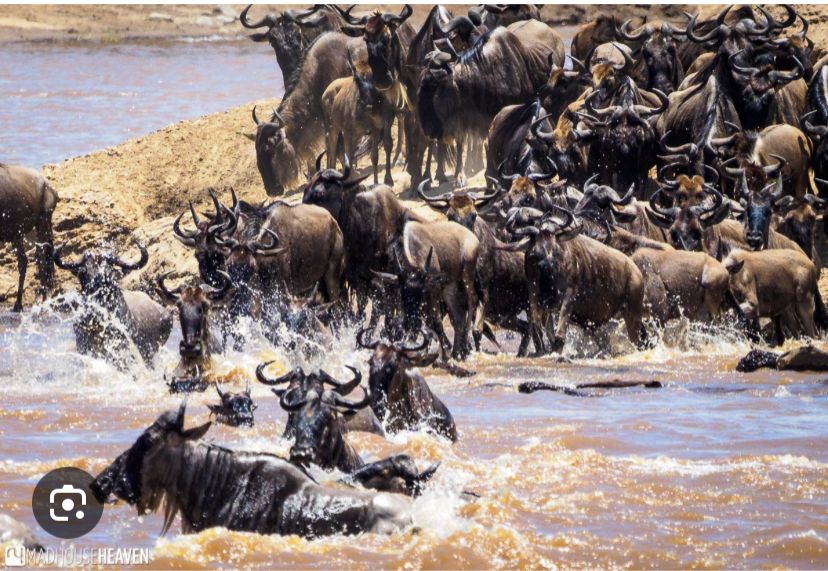
In a statement released in Nairobi on Thursday, KWS said it had noted with concern viral posts accusing the highend camp of obstructing the world renowned Great Wildebeest Migration, a spectacular annual event recently recognised by the World Book of Records (UK) and the World Tourism Market (London) as the planet’s greatest terrestrial migration and one of Africa’s leading tourism attractions.
KWS said the Government of Kenya places the protection of wildlife corridors at the centre of national conservation policy.
It cited ongoing efforts such as the recently approved plan to secure the Nairobi National Park–Athi-Kapiti wildlife corridor as an example.
The agency said the same commitment applies to all corridors within the broader Maasai Mara ecosystem.
The wildlife agency clarified that the Ritz-Carlton Safari Camp sits in a designated low-use tourism investment zone set out in the Maasai Mara National Reserve Management Plan (2023–2032).
The zonation was developed using ecological sensitivity studies and scientific spatial planning carried out jointly by national and county authorities.
KWS said long-term scientific data confirms that wildebeest movement patterns in the Mara have not been disrupted.
More than two decades of GPS collar data from over 60 collared wildebeest tracked between 1999 and 2022 shows that the animals disperse across the entire 68 kilometre stretch of the Kenya Tanzania border, without relying on a single preferred route.
According to the agency, each GPS point typically reflects herds ranging from 2,000 to 100,000 animals, all of which have historically moved freely across the Mara, Sand and Talek rivers, where tourism camps have long existed.
Along the Sand River alone, KWS said five permanent and at least two seasonal camps operate without any record of blocking migration paths.
The long-term monitoring data, KWS said, conclusively indicates that neither the Ritz-Carlton Safari Camp nor other established camps along the Sand River fall within or interfere with any migration routes.
KWS further said several images and stories circulating online date back to incidents from 2018 and 2020 and are being shared without context possibly fuelled by competing commercial interests within the Mara tourism sector.
The agency assured the public that all environmental, ecological and regulatory requirements were met before the Ritz-Carlton project was approved, adding that every tourism investment within Kenya’s protected areas undergoes strict assessment to safeguard conservation .
KWS has urged Kenyans to avoid spreading inaccurate information about the country’s protected areas and iconic wildlife spectacles.
Running behind the Victoria Falls which accounts for a one million visitors a year, the annual Great Wildebeest Migration in Kenya’s Masai Mara attracts abut 400 000 visitors annually, many of whom are there to witness this spectacle.
This event is considered a major driver of tourism for the region and for Kenya as a whole, attracting global attention and boosting the local economy.
Victoria Falls attracts roughly one million tourists per year, with annual figures varying by source.
For example, the combined total for the Zimbabwean and Zambian sides was 467,408 in 2017, 213,277 in 2021, and 549,080 in a later year, according to figures reported to UNESCO.