


By Rex Mphisa
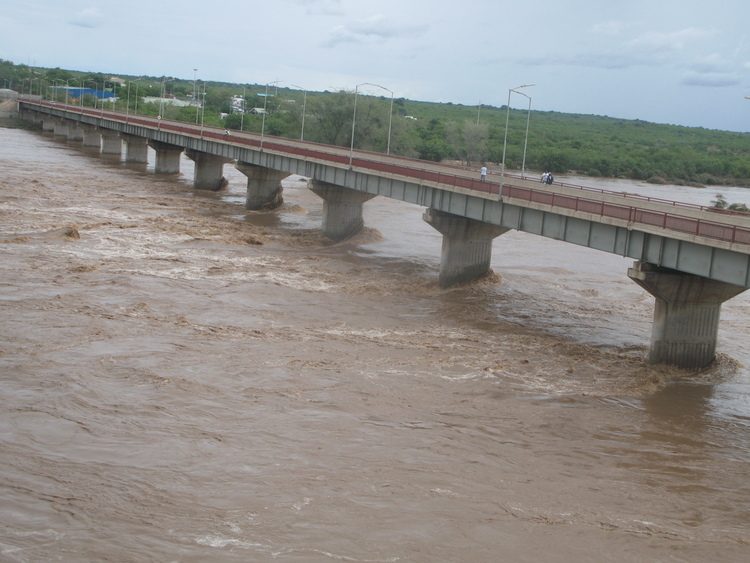
THE Limpopo River, also known as Vhembe, Gulugudela, or Crocodile River, majestically passes Beitbridge town, perhaps giggling at wasted opportunities.
It meanders past dry Vhembe and Beitbridge districts in South Africa and Zimbabwe, respectively, shaping their colonially imposed border.
It has separated the Muleyas, Mbedzis, Ndous, and Matibes, just to name a few of both countries from each other in a cruel fashion that requires a passport.
The Limpopo River, in its journey, wonders if it’s a curse that it is not utilised and is seen more as a border than a resource.
It wishes it was like the Nile, Tigris/Euphrates, Indus, Yellow River, Amazon, Congo, Mississippi, and Yangtze all fundamental lifelines.
These mobile water bodies nurture civilizations providing water, food (fishing), irrigation for agriculture, transportation, and supporting rich ecosystems for millions globally, from ancient Egypt to modern South America and Africa.
But the Limpopo River wonders why it took the Chinese at Palm River Energy and Metallurgical Special Economic Zone to see its usefulness and not locals.
It looks back at an idea once concieved to channel it for vessels to dock at Beitbridge.
That wisdom was shot down on political thoughts that lacked economic vision, perhaps.
The United States of America had approached Zimbabwe at a meeting facilitated by the late Dumiso Dabengwa as Home Affairs Minister.
But Vice President, the late Joshua Nkomo, saw otherwise and turned down the offer in exchange for what would have been an American military base.
The meeting attended by this writer was held in the late 90s at the confluence of the Limpopo and Umzingwane Rivers.
Perhaps the Chinese can now trade the channel as payback for our destroyed mountains inland? It’s a story for another day!
Back to the Limpopo River, it frowns at authorities and citizens alike in Botswana, South Africa, Zimbabwe, and Mozambique as it snakes its course, wasted.
It begs to know why Polokwane, Makhado. Tshaswingo, Tshitulifhasi, Nuli, and Tshapongwe are dry in its vicinity and reach.
Why vast flat and irrigable lands of Beitbridge yawn unexploited yet it can facilitate.
The river has the potential to provide everything far away from the criminal rafting of smugglers officials pretend not to see.
It hands over so much more than the dangerous fish-poaching escapades and illegal forays into South Africa and back so regular.
As it roas past Beitbridge, it provides possible depth for water sports, skiing, boating, and sunset cruises from the mighty sacred Dulivhadzimu pool down and under the two bridges to the spillway.
Its granite firm base provides able foundations for riverfront lodges, offices, and even accommodation flats with the unique scenic view of one of the world’s largest water channels.
Curves in its meanders provide shores for scenic bars complete with the rich smell of fresh or muddy water during wet seasons.
Approximately 1750 kilometres long, forming a large arc through Southern Africa across the four countries.
It is a natural tourist attraction with several sacred places, including the Dulivhadzimu (Place Of The Gods) Gorge and Pool, a rain-making shrine.
There is yet another pool in the heart of what was the Mapungubwe ancient town that was also used for he rain-making activities, then led by the Matibe of the Pfumbi clan.
Another sacred pools is Mashiliye downstream of Beitbridge adjacent to Dohe mountain.
It is known for the river gods in form of sacred crocodiles.
However, this pool has since been also neglected like most sacred places in the region.
Its confluences with its major tributories are a joy to watch during flooding.
When angry, at the confuences, the Limpopo seemingly “rejects” water from its tributaries, causing long backlashes that at times flood Chikwarakwara where it meets with the Bubye River.
The major tributaries of the Limpopo River, originating from Botswana, Zimbabwe, and South Africa, include the Shashe, Notwane, Lotsane, Mogalakwena, Olifants (Elephants), Mokolo, Mwenezi, and Mzingwane Rivers,.
The Shashe forms a key border section while the Olifants (Elephants) is significant in South Africa, with the Mwenezi joining the Limpopo in Mozambique.
Before emptying into the Indian Ocean, making it the second-largest African river, the Limpopo wonders why its water goes to waste.
For instance, it could feed inland dams in Beitbridge East if they are created.
Like all rivers, which have always played an important role in shaping human life, culture, and history, the Limpopo passes many tribes and cultures.
The Sotho, Tswana, Venda, Tshangani, and Pfumbi all have part of the mighty river.
“It has the largest number of crocodile species in the four countries it runs through. It is also rich in fish, particularly the bream and carp,” said Beitbridge teacher Big Ndhlovu.
He said inland dams in Beitbridge East would change the landscape and farming habits, ensuring self sustenance.
Like some rivers that are so ancient and powerful that people give them special names to show respect and admiration, the Limpopo is called Vhembe or Gulugudela.
Gulugudela was derived from Crocodile River, the dominant man eater species in the Limpopo River, which has claimed countless lives.
One of the most known casualties was Scott Van Zyl, a leopard and crocodile trophy hunter killed by Nile crocodiles on April 7, 2017.
While the figure is grossly understated, more than a dozen crocodiles were known to habeen killed during the search for him.
His remains were identified in three of the reptiles during DNA investigations.